What Are the Top Pump Products for Global Buyers?
Global buyers are rethinking pump products as energy costs, water scarcity, and maintenance risks increase. The U.S. Department of Energy reports that pumping systems can consume 25–50% of electricity in some industrial facilities. That figure changes by sector, but the warning is clear. A pump is rarely a small operating expense.
The International Energy Agency also estimates that electric motor systems use more than half of global electricity. Pump efficiency therefore matters beyond the equipment room. A poorly selected unit may create excessive vibration, seal damage, unstable flow, and avoidable energy loss. Small details matter. Pipe diameter matters. Duty cycles matter.
Dr. Lev Nelik, a recognized rotating-equipment specialist and author of Centrifugal and Rotary Pumps, offers a practical reminder: “The pump is only one component of the pumping system.” That principle should guide every global purchase. Buyers should compare hydraulic efficiency, materials, control compatibility, service access, certification, and total life-cycle cost. The lowest catalogue price can become the most expensive decision.
Recent market studies from Grand View Research and MarketsandMarkets show continued growth in the global pump market, driven by water infrastructure, manufacturing, mining, agriculture, and energy projects. Their forecasts differ noticeably. That difference deserves attention, not blind confidence. Definitions, regions, and product categories vary.
This guide examines the top pump products for global buyers. It focuses on real operating conditions, not attractive brochures. Product rankings can never replace site data. Yet they can make a complex shortlist more practical, transparent, and defensible.
Quantify Global Demand: Pumps Consume Up to 27% of Industrial Power (DOE)
What Are the Top Pump Products for Global Buyers?
The U.S. Department of Energy reports that pumping systems can consume up to 27% of industrial power. That figure changes how buyers should evaluate pumps. Purchase price matters, but electricity often dominates lifetime cost. Centrifugal pumps suit steady flow and clean liquids. Positive displacement pumps handle thicker fluids and accurate dosing. Submersible pumps support drainage, wastewater, and deep installations. Vertical turbine pumps serve wells and large water systems.
A pump may look efficient on paper. The real result depends on pipe friction, operating hours, maintenance, and control settings. A 75-kilowatt motor running continuously can waste substantial energy through an oversized pump or throttled valve. Engineers should request tested performance curves, efficiency data, materials information, and service records. International projects also need voltage compatibility, local standards, spare-part access, and documented safety procedures. The calculation is not always clean. Actual demand can vary by season, production shifts, or changing fluid conditions.
Tips:
Measure flow and pressure at the duty point. Compare lifecycle energy costs, not only quotations. Consider variable-speed control when demand changes frequently. Check whether the pump operates near its best efficiency point. Ask for field references from similar applications. Small data gaps can distort a major investment.
Compare Centrifugal Pumps: 70–85% Efficiency Under ISO 9906 Tests
What Are the Top Pump Products for Global Buyers?
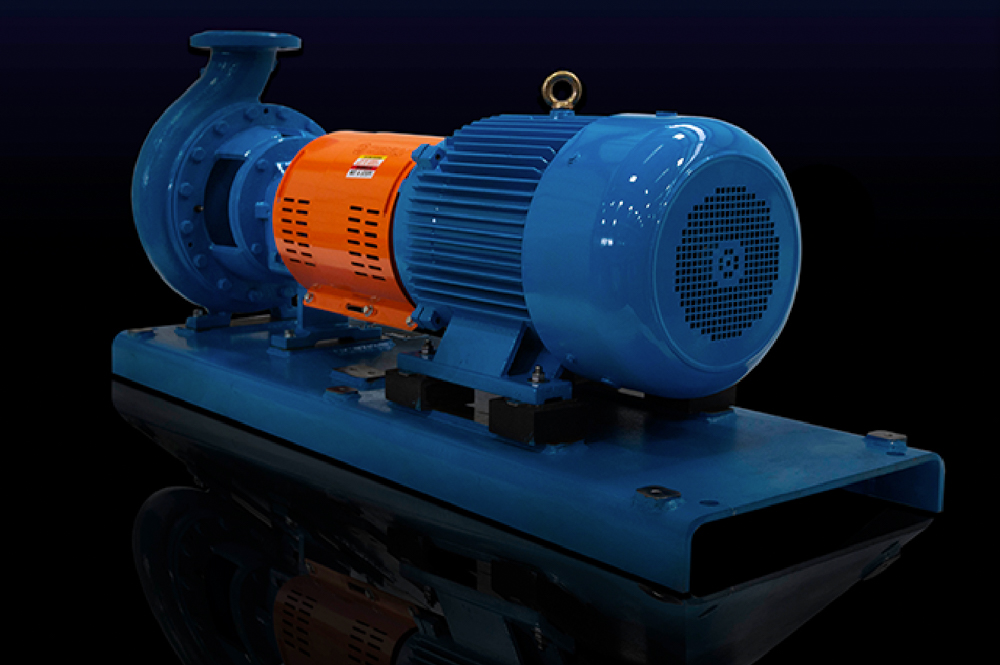
Centrifugal pumps remain a practical choice for water, process, and utility services. Under ISO 9906 performance tests, well-selected models can reach 70–85% hydraulic efficiency. This range is not universal. Flow rate, head, impeller design, and motor matching change the result.
End-suction pumps suit general transfer duties, while split-case pumps handle larger flows.
Multistage pumps fit high-pressure applications, such as boiler feed or reverse-osmosis pretreatment.
A test curve matters more than a catalogue headline.
The U.S. Department of Energy’s Improving Pumping System Performance sourcebook reports that pumping systems may consume 25–50% of industrial facility electricity, depending on the process. Small efficiency losses can become expensive. A pump running 6,000 hours yearly may waste substantial energy when operating far from its best efficiency point.
ISO 9906 testing improves comparison, but site conditions still decide actual performance. I have seen buyers focus on purchase price and overlook throttled valves, oversized motors, and poor suction piping. That decision deserves reconsideration.
Tips:
Request the ISO 9906 test grade, duty-point efficiency, NPSH data, materials, and lifecycle cost. Check whether the quoted 70–85% efficiency applies to your exact flow and head. Include installation, maintenance, electricity, and spare-part access in the evaluation. A lower-priced pump may cost more over five years. Industry guidance from the Hydraulic Institute also supports system-level assessment, not pump-only selection.
Choose Positive-Displacement Pumps: ±1% Dosing Accuracy Under API 675
Global buyers often compare pump capacity, materials, and delivery schedules. Dosing accuracy deserves equal attention. Positive-displacement metering pumps built under API 675 can support accuracy within ±1% under defined operating conditions. This matters when each stroke controls a chemical feed, catalyst dose, or water-treatment additive. A steady discharge protects process consistency. It also reduces waste in expensive production lines.
Yet ±1% is not automatic. Pump selection must match viscosity, pressure, temperature, and required flow range. A calibration column can verify actual delivery before commissioning. Pulsation dampeners may improve flow stability at the discharge point. Check valve condition matters too. Small leaks can distort results. Real systems are rarely perfect.
Tips:
Ask for factory test data and calibration procedures. Confirm whether accuracy refers to repeatability, linearity, or overall performance. Review API 675 documentation with an experienced engineer. During startup, record suction pressure, discharge pressure, stroke length, and measured volume. Compare these readings at several flow rates. Short tests can mislead. A longer observation usually reveals drift caused by temperature or gas entering the liquid. Buyers should also question maintenance access, spare-part availability, and local technical support. A pump that meets the specification on paper may still perform poorly after installation. Careful verification remains essential.
Specify Submersible Pumps: IP68 Protection and 30–50% Solids Handling
Global buyers often prioritize submersible pumps for demanding wastewater and dewatering projects. These pumps operate below the liquid surface, saving space and reducing priming problems. IP68 protection is essential for continuous immersion. It helps shield the motor from water and dust during harsh operation. However, IP68 alone does not guarantee reliable performance. Seal quality, cable entry design, and motor cooling still require careful inspection.
Solids handling is equally important. A pump specified for 30–50% solids must match the actual material, not just the advertised percentage. Buyers should confirm whether the rating refers to volume or weight. They should also check particle size, fiber content, density, and abrasion risk. This detail is often missed. Slurry with sharp grit can wear impellers quickly, even when the solids percentage appears acceptable. A cutter, vortex impeller, or wide-flow design may suit different waste profiles.
Field experience shows that installation affects service life as much as pump design. Use lifting equipment, stable guides, and properly protected power cables. Confirm motor overload protection and moisture sensors before commissioning. Request performance curves at the expected head and flow, not only at the best-efficiency point. Keep maintenance access realistic. A technically strong pump becomes difficult to trust when inspection takes hours. I have seen specifications look perfect on paper, yet poor inlet conditions caused repeated blockages. That possibility deserves honest review before purchase.
Validate Smart Pump Packages: 20–50% VFD Savings and IE5 Motor Options
What Are the Top Pump Products for Global Buyers?
Smart pump packages deserve closer attention than standalone pumps. A practical package combines a high-efficiency motor, variable frequency drive, pressure sensors, and control software. The U.S. Department of Energy’s pumping-system guidance reports potential VFD savings of 20–50% in suitable variable-flow applications. The result depends on duty conditions, not sales claims.
The IEA reports that electric motor systems consume more than 40% of global electricity. Pumping often operates for thousands of hours yearly, so small efficiency gains become visible on energy bills. An IE5 motor can reduce electrical losses under IEC 60034-30-2 efficiency classifications. However, IE5 performance needs correct sizing, cooling, alignment, and load matching. Higher efficiency alone cannot fix an oversized pump.
Real projects can disappoint. I would check the pump curve at minimum, normal, and peak demand. Then I would compare measured kWh before and after commissioning. A 20–50% saving is possible, but never automatic.
Tips:
Request a 12-month energy model, not only a motor-efficiency certificate. Confirm sensor accuracy and control response at low flow. Check harmonic limits, enclosure protection, and local service capacity. Ask for test records under realistic operating points. The European Commission’s Ecodesign work also supports life-cycle evaluation, since purchase price rarely represents total pump cost. Field data should challenge the brochure.