Global buyers entering 2026 face a crowded market of pump products, but popularity alone cannot define the best choice. A pump that performs well in a clean-water plant may fail quickly in abrasive slurry. Material, duty point, energy use, maintenance access, and local service must guide the decision. Small details matter. A clogged strainer can stop an entire line.
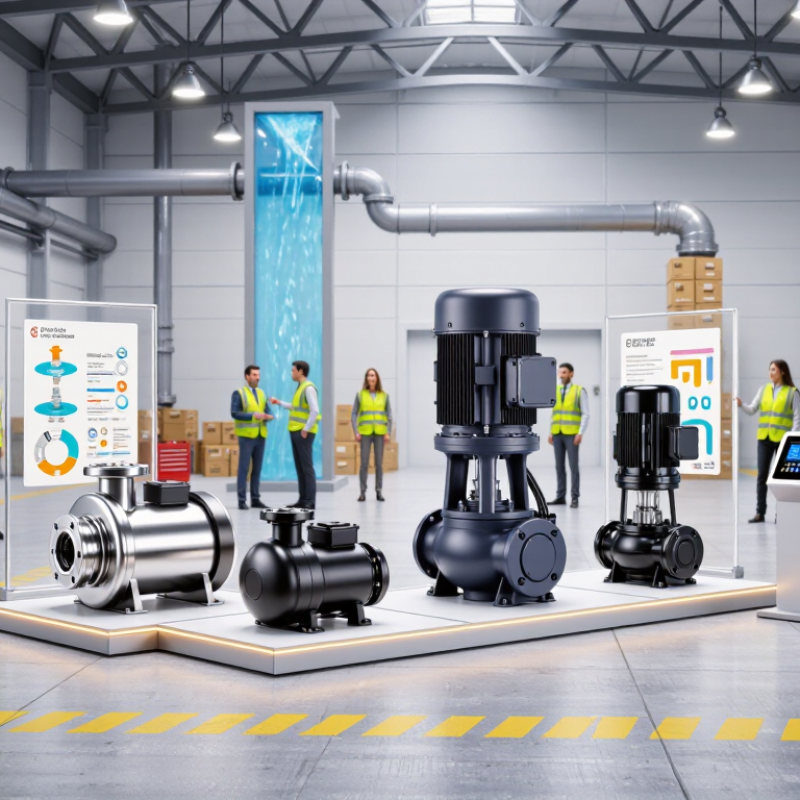
Pump specialist Dr. Lev Nelik has emphasized, “The pump is only one part of the system.” This principle remains highly relevant for 2026 purchasing decisions. Buyers should examine centrifugal pumps for general water transfer, diaphragm pumps for chemical dosing, submersible pumps for drainage, and magnetic-drive pumps for leak-sensitive applications. Smart pumps also deserve attention, especially where variable-speed control can reduce energy waste and provide operating data.
Yet no product list can serve every region equally. A premium pump may offer excellent efficiency, but replacement seals may be difficult to source locally. A lower-cost model may appear attractive, but its lifecycle expense could become surprisingly high. That is an uncomfortable point.
Reliable selection requires evidence. Buyers should request performance curves, efficiency data, material specifications, test records, warranty terms, and documented references from comparable installations. Suppliers should also explain how their products perform under voltage variation, temperature changes, and intermittent operation.
This guide examines the leading pump products expected to attract global buyers in 2026. It considers practical performance, application fit, ownership cost, and supplier credibility. The ranking is useful, but not absolute. Conditions change. Careful judgment still matters.
For global buyers, the 2026 pump shortlist should begin with energy use, not purchase price. IEA analysis commonly cited across industrial efficiency studies estimates that pumps consume about 25% of industrial electricity. That share makes every efficiency decision visible on a factory meter. A poorly selected pump may run for thousands of hours, quietly adding cost through throttling, oversized motors, and avoidable pressure losses.
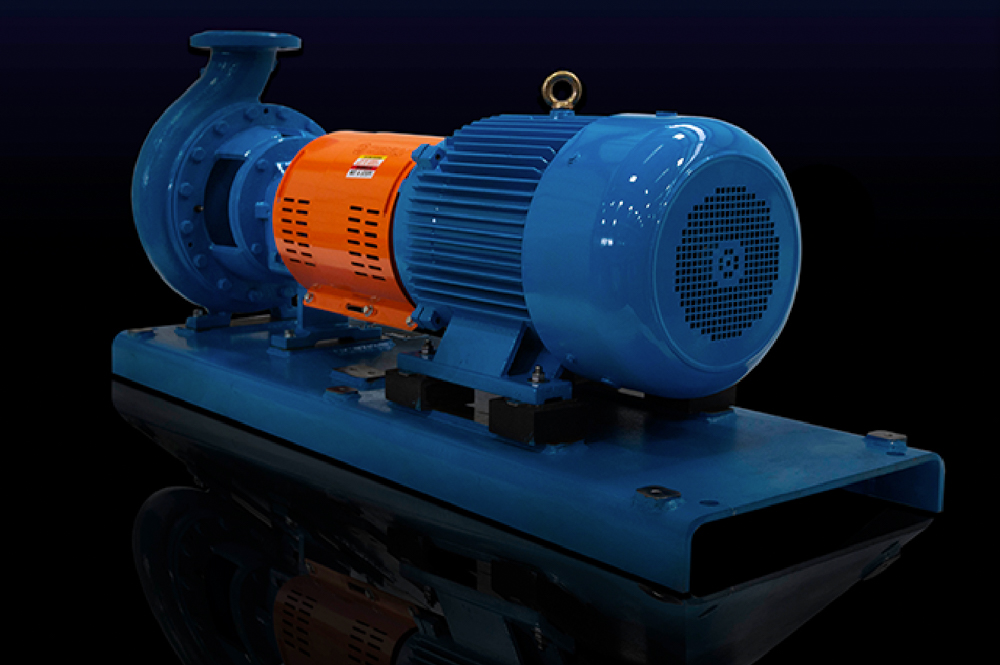
The strongest product categories include high-efficiency centrifugal pumps, positive-displacement pumps for viscous fluids, and integrated pump systems with variable-speed drives.
The U.S. Department of Energy’s pumping-system guidance notes that system efficiency depends on the entire installation, including pipes, valves, controls, and operating conditions.
A pump operating near its best efficiency point usually performs better than a larger unit running half-open. Small details matter. A clogged strainer can change the calculation.
Digital monitoring is also becoming a practical buying criterion. The International Energy Agency’s energy-efficiency reports repeatedly identify motor systems and industrial controls as major efficiency opportunities. Buyers should request measured flow, head, motor efficiency, noise levels, maintenance intervals, and lifecycle energy estimates.
A dashboard alone is not proof of savings. In real facilities, sensors may drift, operators may bypass controls, and old pipes may undermine new equipment. The uncomfortable question is simple: are we buying a better pump, or only a more expensive measurement system?

For global buyers, centrifugal pump selection should begin with verified hydraulic performance, not catalogue promises. ISO 9906 provides a practical framework for testing flow, head, shaft power, and efficiency. It helps procurement teams compare pumps under controlled conditions.
High-flow applications demand careful test preparation. The test loop must remain stable while large volumes move through the system. Calibrated flow meters, pressure gauges, and power instruments should have traceable records. Technicians normally record several operating points around the required duty point. This reveals whether the pump performs consistently or only reaches its headline figure. Small errors matter. A minor pressure reading error can change the calculated head and efficiency. Test reports should state the selected ISO 9906 acceptance grade, measurement uncertainty, fluid conditions, speed, and impeller diameter. Without these details, comparison becomes weak.
Field experience also shows that laboratory results do not always repeat perfectly on site. Pipe fittings, suction conditions, water temperature, and installation alignment can affect performance. That gap deserves attention. Buyers should request raw data, test certificates, and clear acceptance criteria before shipment. A witnessed test may add time and cost, but it exposes unstable readings and unexpected vibration early. Some projects still rely on one attractive efficiency number. That is risky. Reliable decisions come from the complete curve, documented methods, and honest discussion of testing limits.
What Are the 2026 Top Pump Products for Global Buyers?
Positive-displacement pumps remain valuable when processes require stable, measured flow. API 674 covers reciprocating pumps for demanding services, while API 676 addresses rotary pump designs. Each standard guides mechanical design, materials, inspection, testing, and documentation. In practice, flow accuracy depends on more than the pump itself. Suction conditions, fluid viscosity, speed control, and relief protection all matter. A small suction restriction can create serious performance problems.
API 674 pumps suit high-pressure dosing, injection, and transfer duties where pulsation control is important. Engineers may specify dampeners, robust crank mechanisms, and carefully verified valves. API 676 pumps often support continuous transfer of viscous fluids. Screw, gear, and other rotary configurations can provide smooth delivery with limited pulsation. However, “smooth” does not mean universally suitable. Abrasive particles, temperature changes, and poor lubrication can shorten service life. A perfect selection is rare.
Tips: Confirm viscosity across the full operating range. Check NPSH with real suction temperatures. Request material certificates, test records, and performance data. Compare the duty point with the complete system curve, not a catalog value. It is also wise to review local installation requirements before purchase. Some specifications appear clear, yet small omissions can cause expensive revisions. Honest technical review is better than optimistic sizing.
For global buyers, an IP68 submersible pump must handle more than standing water. It may face sewage, silt, plastic debris, and sudden flood surges. Under IEC 60529, IP68 confirms dust-tight construction and continuous immersion under specified conditions. It does not define one universal depth or operating time. Buyers should request the tested immersion limits.
The need is substantial. The UN World Water Development Report 2024 states that about half the global population experiences severe water scarcity during part of each year. The WMO’s State of the Global Climate 2023 also recorded major flood impacts across many regions. In practice, pumps need robust cable glands, sealed motor housings, corrosion-resistant fasteners, and reliable thermal protection. A vortex impeller can reduce clogging, but it may sacrifice some hydraulic efficiency. That trade-off matters.
Check the pump curve at the real discharge head. Do not rely only on maximum flow. For wastewater, verify the free-passage diameter and solids-handling capability. For floodwater, check priming behavior, float-switch reliability, and restart performance after voltage drops. I would also inspect seals after every severe deployment. IP68 is not a magic shield. A perfect specification does not exist, and field maintenance is still where many failures begin.
What Are the 2026 Top Pump Products for Global Buyers?
Smart pump systems are becoming a practical choice for factories, buildings, and water facilities. Their core advantage is simple: IE4 motors reduce electrical losses during daily operation. When paired with variable-speed drives, pumps can adjust output to actual demand. In suitable systems, energy savings may reach 20–30%. That range is not automatic. It depends on pipe resistance, operating hours, fluid conditions, and control settings.
A well-designed system uses pressure sensors, flow feedback, and a controller that responds quickly. For example, a booster pump can slow down when several outlets close. This prevents unnecessary pressure and reduces mechanical stress. During site inspections, engineers should compare the pump curve with real operating points. Oversized pumps often waste energy through throttling. It happens more often than buyers expect. Accurate commissioning matters too. A perfect motor cannot correct poor programming or blocked filters.
Global buyers should also examine service access, spare parts, protection ratings, and maintenance records. Remote monitoring can reveal rising vibration or unusual power consumption before failure occurs. However, connected features add complexity and require trained technicians. That trade-off deserves honest review. Some projects may save less than predicted because demand changes unpredictably. Measuring performance after installation is therefore essential. Real operating data should influence future pump selection, not only catalog figures.
| Product Category | Typical Flow Range | Typical Head Range | Motor and Drive Configuration | Typical Energy-Saving Potential | Smart Control Functions | Common Global Applications | Recommended Protection and Compliance Features |
|---|---|---|---|---|---|---|---|
| Smart End-Suction Centrifugal Pump | 5–500 m³/h | 10–100 m | IE4 squirrel-cage motor with integrated or cabinet-mounted variable-frequency drive | 20–30% compared with fixed-speed throttling in variable-demand systems | Constant-pressure control, dry-run protection, overload monitoring, remote start/stop, operating-point display | Commercial buildings, irrigation, municipal water transfer, light industrial circulation | IP55 or higher motor enclosure, thermal protection, EMC-compliant drive, CE/UKCA-ready documentation where applicable |
| Smart Inline Booster Pump | 2–120 m³/h | 15–160 m | IE4 motor with variable-speed control and pressure sensor feedback | 15–30% under fluctuating domestic or commercial water demand | Automatic pressure regulation, multi-pump sequencing, fault alarm, sleep mode, Modbus or equivalent communication | High-rise buildings, hotels, hospitals, residential water boosting | Low-noise operation, non-return valve, over-temperature protection, stainless-steel wetted parts for potable-water systems when required |
| Smart Multistage High-Pressure Pump | 1–180 m³/h | 40–400 m | IE4 motor paired with a variable-frequency drive and proportional-integral pressure control | 20–30% when demand varies throughout the day | Constant differential-pressure mode, cascade control, sensor redundancy, energy-performance logging | Reverse osmosis pretreatment, boiler feed, process water, pressure boosting, water treatment | High-pressure-rated casing, dry-run sensor, phase-loss protection, pressure relief provisions, IEC motor documentation |
| Smart Submersible Drainage Pump | 10–600 m³/h | 5–80 m | High-efficiency motor with variable-speed control for systems with changing water levels | 10–25% where discharge flow can be modulated | Water-level sensing, automatic cycling, blockage alarm, thermal monitoring, remote status reporting | Construction sites, flood control, mining drainage, wastewater collection, underground facilities | IP68 motor protection, corrosion-resistant cable entry, mechanical seal monitoring, clog-resistant impeller options |
| Smart Sewage and Wastewater Pump | 5–1,000 m³/h | 5–90 m | IE4-class motor where available for the selected rating, with variable-speed drive and level-based control | 15–25% in lift stations with variable inflow | Level control, alternating duty/standby operation, anti-clogging cycle, vibration and temperature alarms | Municipal wastewater, commercial sewage systems, industrial effluent handling | IP68 protection, motor thermal sensors, automatic restart logic, corrosion-resistant materials, local electrical-code compliance |
| Smart HVAC Circulation Pump | 1–300 m³/h | 3–60 m | Permanent-magnet or IE4 motor with electronic variable-speed control | 20–30% in heating and chilled-water systems with thermostatic load variation | Constant-pressure, proportional-pressure and constant-flow modes; automatic night setback; fault history | District cooling, commercial HVAC, data centers, process cooling and heating loops | Low-noise design, insulated housing options, automatic air-release support, BACnet or Modbus integration where required |
| Smart Solar Water Pump | 1–250 m³/h | 10–250 m | High-efficiency motor with solar-compatible variable-frequency drive and optional grid backup | 20–30% through speed matching and reduced throttling losses | Maximum-power-point tracking, dry-run detection, remote monitoring, automatic solar/grid changeover | Irrigation, livestock watering, rural water supply, off-grid utility systems | Surge protection, DC and AC isolation, IP-rated control enclosure, overvoltage and undervoltage protection |
| Smart Chemical-Process Pump | 0.5–150 m³/h | 10–160 m | IE4 motor with variable-speed control; wetted materials selected for chemical compatibility | 15–25% when dosing, transfer or recirculation demand varies | Flow verification, leak detection, pressure monitoring, recipe-based speed control, remote diagnostics | Water treatment, chemical processing, food production, pharmaceutical utilities | Material compatibility assessment, mechanical-seal options, ATEX or hazardous-area certification when required, emergency shutdown input |