Choosing reliable industrial pumps is rarely a simple ranking exercise. Global buyers must compare performance, materials, service capacity, and long-term operating costs. China’s manufacturing sector includes experienced suppliers serving water treatment, mining, chemical processing, agriculture, construction, and energy projects. However, product quality can vary between factories, even when brochures look similar.
This guide introduces ten Chinese industrial pump manufacturers that attract international attention. The selection considers manufacturing experience, product range, engineering capability, export history, and customer support. Practical details matter. A stainless steel pump may suit corrosive liquids, while a cast iron model may offer better value for general water transfer. Flow rate, head pressure, temperature, seal design, and motor efficiency should match the actual site conditions.
Look beyond polished websites. Request test reports, material certificates, installation references, and clear warranty terms. Factory audits can reveal assembly standards, machining quality, spare-parts systems, and testing equipment. These checks often matter more than marketing language. Not every listed manufacturer will fit every project. That is worth admitting. Some companies may have strong pumps but limited overseas service, while others may offer excellent support with higher prices. Buyers should verify current certifications, production capacity, delivery schedules, and local compliance before signing contracts. A careful comparison can reduce downtime, protect budgets, and support safer, more predictable operations. Reliability is built in the details.
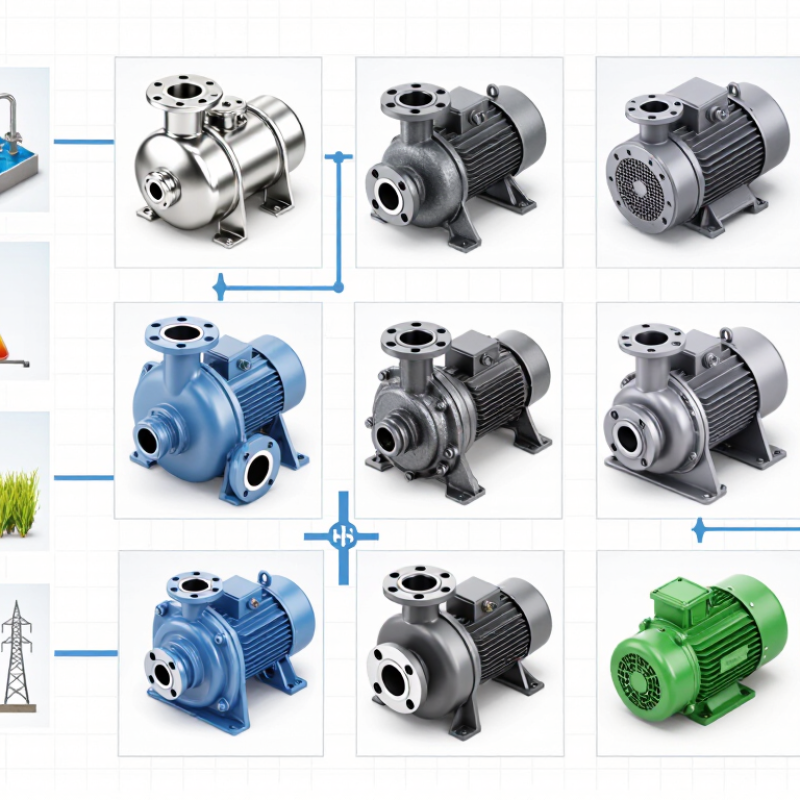
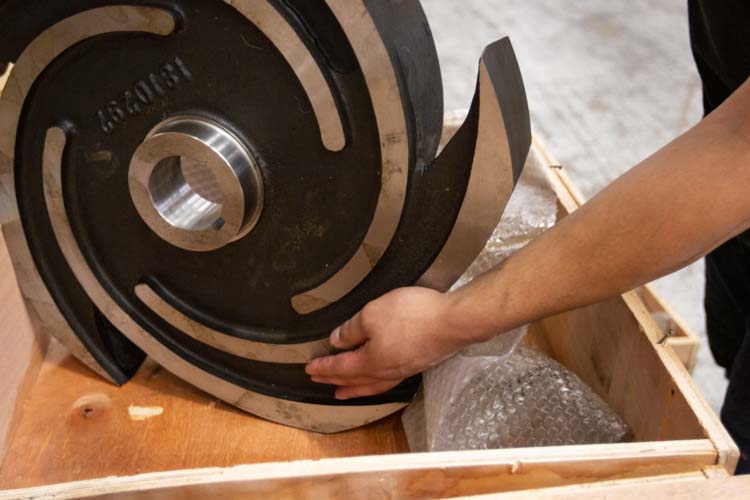
For global buyers, centrifugal pumps are often the practical starting point for water, chemicals, and process fluids. Their rotating impeller converts motor energy into flow and pressure. In well-matched systems, efficiency typically falls between 60% and 90%. The upper end is achievable, not automatic. Real sites are messier.
Efficiency depends on the duty point, not the catalog headline. A pump operating near its best efficiency point usually runs more smoothly and wastes less power. Engineers should compare required flow, head, fluid density, viscosity, temperature, and solids content.
A small mismatch can increase vibration, seal wear, and electricity costs. Check NPSH available against NPSH required before approval. This detail matters.
During supplier evaluation, request certified performance curves, material data, factory test records, and clear tolerance statements. Ask how efficiency was measured and under which standard. Field commissioning should record flow, discharge pressure, motor input, and vibration. These readings reveal whether the selected pump performs beyond paper.
Field experience often shows promising selections lose efficiency after throttling, fouling, or poor pipe layout. That is worth admitting. A 60% efficient pump may be sensible for a difficult fluid, while a 90% unit may fail if oversized. Selection should follow operating reality, maintenance access, and lifecycle cost—not efficiency alone.
A useful ranking of China’s top industrial pump manufacturers should begin with measurable evidence, not advertising claims. Capacity shows whether a factory can handle repeat orders and urgent projects. Flow rate reveals suitability for mining, water treatment, chemicals, and process industries. However, maximum flow figures can mislead without pressure, temperature, and medium data.
Certifications also deserve close inspection. Buyers should verify current quality, safety, and environmental certificates through issuing bodies. Export reach matters too. A supplier serving different regions usually understands packaging, documentation, customs procedures, and local technical expectations. Service is less visible, but often decisive. Response time, spare-parts availability, commissioning support, and warranty handling can affect a pump’s real operating cost. Factory visits and sample inspections remain valuable, though they are not always practical. My ranking would still include verified production records, not only polished showrooms.
Tips: Ask for tested performance curves, material specifications, and recent project references. Compare actual operating points, not headline flow rates. Check whether after-sales engineers can communicate clearly in your time zone. A low purchase price may hide expensive downtime. Also, no ranking is perfect. Some factories report capacity differently, and export data may be incomplete. Buyers should reassess suppliers against their own fluid conditions, delivery schedule, certification needs, and maintenance resources.
Ranking Criteria: Capacity, Flow Rate, Certifications, Export Reach, and Service
| Rank | Anonymous Supplier Profile | Annual Production Capacity | Typical Flow Range | Maximum Head | Main Pump Categories | Key Certifications | Export Reach | International Service Capability | Overall Score |
|---|---|---|---|---|---|---|---|---|---|
| 1 | Profile A — Integrated Heavy-Duty Pump Manufacturer | 10,000–20,000 units/year | 5–20,000 m³/h | 250 m | End-suction, split-case, multistage, sewage, fire pumps | ISO 9001; CE; ISO 14001; ISO 45001 | 70+ countries | Application engineering, commissioning support, spare-parts supply | 94/100 |
| 2 | Profile B — Large-Flow Water Infrastructure Specialist | 8,000–15,000 units/year | 20–30,000 m³/h | 180 m | Axial-flow, mixed-flow, split-case, vertical turbine pumps | ISO 9001; CE; ISO 14001 | 60+ countries | Hydraulic selection, project documentation, remote troubleshooting | 92/100 |
| 3 | Profile C — Process and Chemical Pump Specialist | 6,000–12,000 units/year | 0.5–5,000 m³/h | 160 m | Magnetic-drive, chemical, slurry, API-process pumps | ISO 9001; CE; ATEX options for selected models | 50+ countries | Material selection, process review, seal and wear-part support | 90/100 |
| 4 | Profile D — Municipal and Industrial Water Systems Supplier | 7,000–13,000 units/year | 3–12,000 m³/h | 220 m | Booster, drainage, sewage, firefighting, multistage pumps | ISO 9001; CE; ISO 45001 | 45+ countries | System sizing, control-panel coordination, installation guidance | 88/100 |
| 5 | Profile E — Energy and Boiler-Feed Pump Manufacturer | 4,000–9,000 units/year | 2–2,500 m³/h | 600 m | High-pressure multistage, boiler-feed, condensate, API pumps | ISO 9001; CE; selected ASME/API project compliance | 40+ countries | Performance testing, vibration analysis, technical documentation | 87/100 |
| 6 | Profile F — Mining and Abrasive-Slurry Pump Specialist | 3,000–8,000 units/year | 10–5,000 m³/h | 150 m | Slurry, dredging, dewatering, rubber-lined pumps | ISO 9001; CE; ISO 14001 | 35+ countries | Wear-life consultation, field troubleshooting, replacement-part planning | 85/100 |
| 7 | Profile G — Fire Protection and Building Services Supplier | 8,000–18,000 units/year | 5–1,500 m³/h | 180 m | Fire pumps, jockey pumps, HVAC, booster sets | ISO 9001; CE; selected local fire-system approvals | 40+ countries | Packaged-system design, FAT support, operation manuals | 84/100 |
| 8 | Profile H — Stainless-Steel and Hygienic Pump Manufacturer | 3,000–7,000 units/year | 1–1,200 m³/h | 120 m | Sanitary centrifugal, lobe, screw, self-priming pumps | ISO 9001; CE; selected hygienic-design compliance | 30+ countries | CIP suitability review, polishing specifications, spare seals | 82/100 |
| 9 | Profile I — Compact OEM and Custom-Pump Supplier | 2,000–6,000 units/year | 0.2–800 m³/h | 100 m | Small centrifugal, dosing, diaphragm, OEM assemblies | ISO 9001; CE; RoHS for applicable electrical assemblies | 25+ countries | Private-label engineering, drawing review, low-volume customization | 79/100 |
| 10 | Profile J — Standardized Commercial Pump Exporter | 5,000–12,000 units/year | 1–1,000 m³/h | 100 m | End-suction, inline, self-priming, peripheral pumps | ISO 9001; CE | 20+ countries | Standard datasheets, remote product support, distributor assistance | 76/100 |
China’s Top 10 Industrial Pump Manufacturers by Products and Global Markets
For global buyers, China’s leading industrial pump manufacturers are better compared by product strength and export reach, not factory size alone. The strongest suppliers usually specialize in centrifugal, multistage, slurry, diaphragm, metering, screw, and submersible pumps. These categories serve water treatment, mining, chemical processing, power generation, agriculture, and oil and gas projects.
MarketsandMarkets estimates that the global industrial pump market may grow from about USD 65 billion in 2024 to more than USD 86 billion by 2029. China remains important because of its broad manufacturing base, competitive machining costs, and flexible customization. Export-focused manufacturers often supply Southeast Asia, the Middle East, Africa, Europe, and Latin America. Their advantages include stainless-steel options, variable-frequency drive compatibility, and rapid production for standard models. Yet performance varies. A low purchase price can hide higher energy use or limited after-sales support. The U.S. Department of Energy notes that pumping systems can represent a major share of industrial motor electricity consumption. Efficiency deserves attention.
Tips: Check hydraulic curves, efficiency at the actual duty point, material certificates, test records, and local service capacity. Ask for references in similar fluids and temperatures. Confirm whether stated data follows ISO, API, or equivalent standards. This step is often skipped. It should not be. A practical ranking also needs verified delivery history, warranty response, and spare-parts availability. Public export data is useful, but it cannot fully reveal product reliability. That remains a limitation.
China’s top 10 industrial pump manufacturers serve demanding sectors, from water treatment to process engineering. Global buyers should compare performance data, not catalog claims alone. Flow describes capacity, while head indicates how high the pump can move liquid. Pressure depends on head, liquid density, and system losses. These values must match actual operating conditions.
Materials affect service life. Stainless steel suits many corrosive fluids, while cast iron often fits general water duties. For abrasive liquids, buyers should examine impeller design, shaft protection, and seal selection.
IE3 motors provide efficient operation, while IE4 motors can reduce energy use during long working hours. However, higher efficiency does not automatically mean lower total cost. Purchase price, maintenance access, spare parts, and local technical support also matter.
A neat spreadsheet can still mislead when testing conditions differ.
Tips: Request certified performance curves, motor efficiency data, material certificates, and factory test records. Ask whether flow and head were measured together, not separately. Confirm voltage, frequency, duty cycle, ambient temperature, and protection rating before ordering. In practice, many selection errors come from using maximum flow instead of normal flow. That mistake deserves careful review. A reliable manufacturer should explain tolerances, warranty limits, and commissioning requirements clearly. Suppliers that avoid technical questions may not be suitable for complex industrial service.
China Top 10 Industrial Pump Manufacturers for Global Buyers
A global buyer should verify standards before comparing prices. API 610 supports reliable centrifugal pumps for petroleum, petrochemical, and gas services. ISO 2858 defines key dimensions and performance requirements for end-suction centrifugal pumps. Ask for certified test results, not only a compliance statement. Confirm flow, head, efficiency, NPSH margin, materials, seals, vibration, and hydrostatic testing.
CE marking confirms applicable European conformity requirements. It is not a quality award. Request the EU Declaration of Conformity, risk assessment, technical file summary, and electrical documentation when relevant. The International Energy Agency reports that electric motor systems consume about 53% of global electricity. Pump efficiency therefore affects long-term cost more than a small purchase discount. Include electricity, maintenance, downtime, spare parts, and disposal in the TCO model.
Warranty terms need practical detail. Check coverage periods, response times, exclusions, commissioning rules, and local service capacity. A two-year warranty sounds strong. It may exclude seals, bearings, or improper alignment. That matters. Industry procurement data repeatedly shows that energy and maintenance dominate equipment lifecycle costs, although exact shares vary by application. Do not accept generic savings claims. Compare tested duty-point efficiency and annual operating hours. One weakness remains common: buyers sometimes approve a pump before confirming real site conditions. That mistake can create cavitation, unstable operation, and avoidable energy waste.
This chart shows the number of verification items in a practical buyer checklist rather than company performance data. API 610 covers centrifugal pump requirements for petroleum, petrochemical, and natural gas applications; ISO 2858 defines key dimensions and designation requirements for end-suction centrifugal pumps; CE marking confirms conformity with applicable European Union legislation; warranty review focuses on written coverage terms; and TCO includes purchase, energy, maintenance, downtime, and end-of-life costs.
Reference framework: API 610, ISO 2858, applicable EU product legislation, contractual warranty documents, and lifecycle-cost analysis.