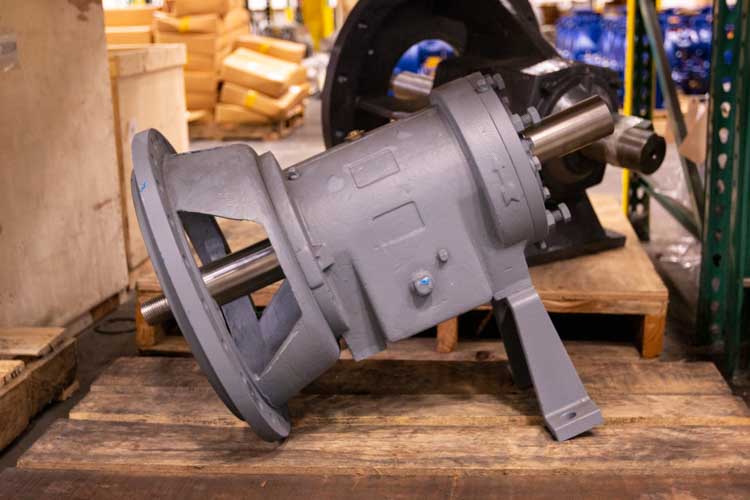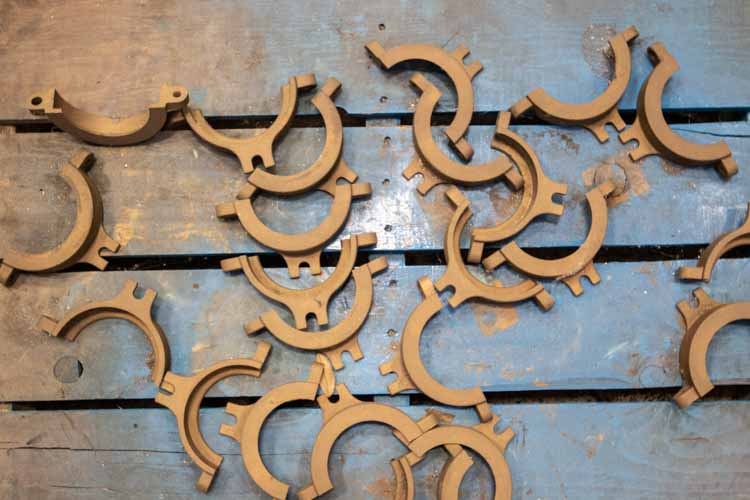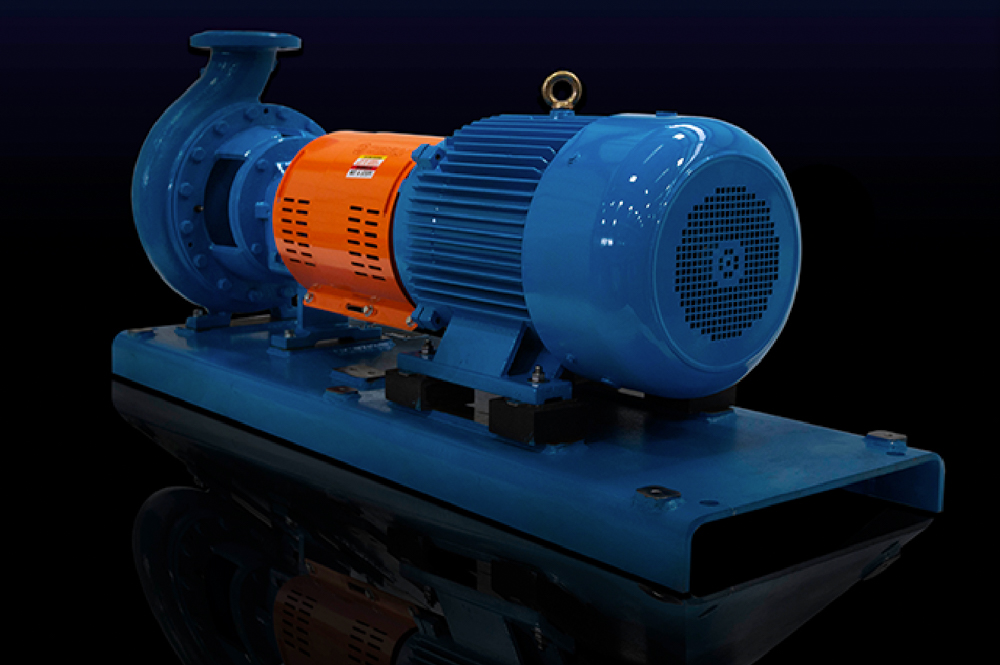
Choosing among the top types of stainless steel pumps starts with the liquid, not the product label. A clear, low-viscosity liquid may suit a centrifugal design, while thick syrup or oil can call for positive displacement. Flow rate, discharge pressure, temperature, and cleaning requirements also shape the decision. Small details matter.
A stainless steel pump is often chosen for its durability and cleanable surfaces, but stainless steel is not immune to corrosion. Grade 304 may suit many general duties; grade 316 can offer better resistance in some chloride-containing environments. Neither is a universal answer. Check the fluid composition and operating conditions before specifying materials.
This guide introduces common pump types and explains where each design tends to perform well. Centrifugal pumps handle many steady-flow applications. Gear, screw, and other positive displacement pumps can move more viscous liquids at controlled rates. Self-priming models help where the pump must lift liquid into its casing, while submersible pumps operate below the liquid surface. Designs can overlap, so the category alone does not settle the choice.
We will compare their operating principles, practical strengths, and limitations. Actual performance depends on the pump curve, installation, and maintenance—not just the material. A compact pump may look suitable on a specification sheet, yet struggle with a demanding duty. That is worth checking. The following overview helps readers ask better questions before selecting a pump for food processing, chemical handling, water service, or another application.
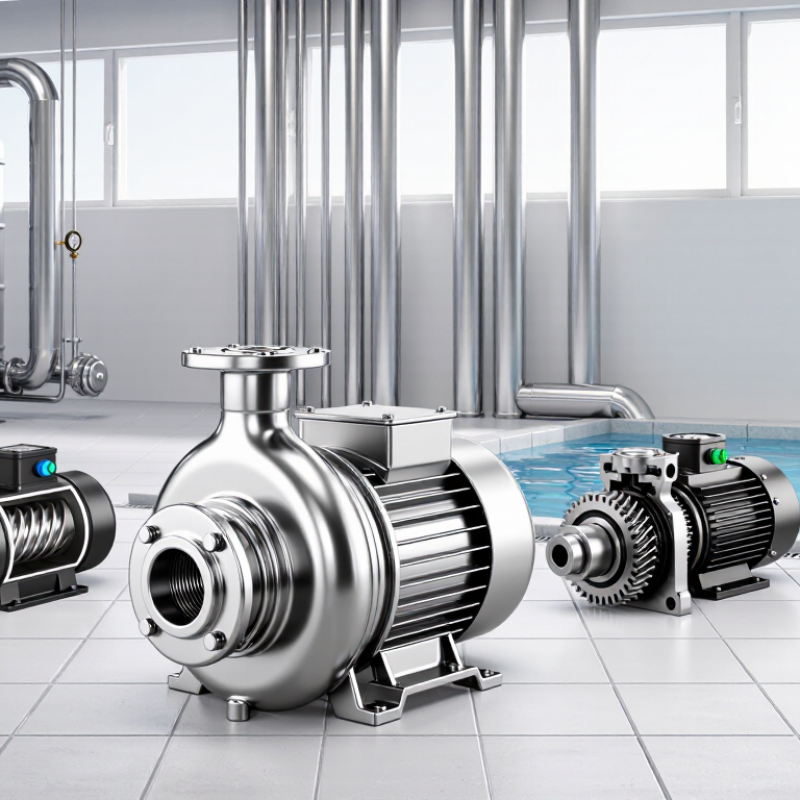
A stainless steel pump is defined mainly by the materials that contact the pumped liquid. These wetted parts commonly include the casing, impeller, and shaft. Stainless steel helps resist corrosion and withstand repeated cleaning, but it does not make every pump suitable for every fluid. A label alone tells you surprisingly little. The steel grade, surface finish, weld quality, and seal materials all affect performance. For example, a pump handling salty water may need different corrosion resistance from one moving clean water.
Grades such as 304 and 316 are common, yet neither is universally best. Chloride levels, temperature, chemical concentration, and exposure time can change how the metal behaves. Seals and gaskets matter, too; they may wear or react before the steel does. Not always obvious. Check the complete wetted-material specification, not just the casing description.
A practical selection also considers flow rate, pressure, liquid viscosity, and any suspended solids. In food or pharmaceutical service, smooth surfaces and drainable designs can support effective cleaning. During inspection, look for pitting, damaged seals, unusual vibration, or residue around joints. These details can reveal problems early. Stainless steel is durable, but it still needs appropriate operation and maintenance. I would treat “stainless” as a useful starting point, not a performance guarantee.
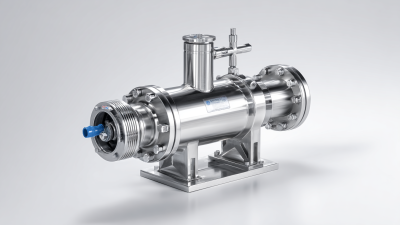
What Are the Top Types of Stainless Steel Pumps?
How Pumping Mechanisms Classify Stainless Steel Pumps
Stainless steel describes a pump’s construction, not its pumping mechanism. Centrifugal pumps use a rotating impeller to move liquid continuously. They often suit water, cleaning solutions, and other relatively free-flowing fluids. Positive displacement pumps move a fixed volume with each cycle. Gear and screw designs can handle oils and thicker liquids, while diaphragm and peristaltic designs suit some sensitive or abrasive fluids. That distinction matters.
The mechanism affects flow, pressure, and fluid handling. Centrifugal pumps may lose performance with highly viscous liquids. Positive displacement pumps can maintain flow more steadily as pressure changes, but need protection against blocked outlets. A label alone can mislead. Actual results depend on pump sizing, seals, temperature, and the stainless steel grade’s chemical compatibility.
The U.S. Department of Energy’s Improving Pumping System Performance: A Sourcebook for Industry reports that pumping systems use nearly 20% of global electricity demand. It also estimates they account for 25–50% of energy use in some industrial plants. That makes mechanism selection more than a materials decision. The figures are broad, not specific to stainless steel pumps, and operating conditions matter. A careful comparison should include required flow, fluid viscosity, and expected solids before choosing a design.
| Pump Type | Pumping Mechanism | Flow Characteristics | Common Applications | Key Advantages | Selection Considerations |
|---|---|---|---|---|---|
| Centrifugal | A rotating impeller transfers energy to the liquid, which is directed through the pump casing. | Continuous flow; flow rate generally decreases as the required discharge head increases. | Water transfer, food and beverage processing, washdown, and circulation of low-viscosity liquids. | Simple construction, steady output, and suitability for relatively high flow rates. | Performance depends on system head and liquid properties. Standard designs are generally not ideal for highly viscous liquids or precise metering. |
| External Gear | Meshing gears trap liquid between the gear teeth and casing and carry it from the inlet to the outlet. | Positive-displacement flow; output is related to pump speed, with some slip depending on pressure and liquid viscosity. | Oils, syrups, lubricants, and other clean, viscous liquids. | Compact design and useful performance with many viscous liquids. | Clearances and wear can affect performance. Hard particles may damage the gears, and pressure protection is important because positive-displacement pumps can continue building pressure. |
| Twin-Screw | Two synchronized screws move liquid axially through the pump as the screws rotate. | Positive-displacement flow that is typically smooth and relatively low in pulsation. | Viscous products, multiphase liquids, and some hygienic process duties. | Can handle a broad range of viscosities and can provide gentle, continuous transfer. | Operating limits depend on screw design, speed, product properties, and clearances. Verify the specified materials and cleaning requirements for the application. |
| Rotary Lobe | Rotating lobes carry pockets of liquid from the suction side to the discharge side without the lobes touching each other. | Positive-displacement flow with some pulsation; output is influenced by speed and pressure-related slip. | Food products, personal-care liquids, and other viscous or shear-sensitive fluids. | Can transfer delicate products and may accommodate soft solids, depending on the design. | Not generally suited to abrasive particles, which can accelerate wear. Clearances, seals, and cleaning arrangements should match the product and process. |
| Diaphragm | A moving diaphragm changes the volume of a chamber, drawing liquid in through an inlet valve and expelling it through an outlet valve. | Intermittent, positive-displacement flow; pulsation varies by design and may be reduced with suitable accessories. | Chemical transfer, dosing, and applications where liquid isolation from moving drive components is useful. | The diaphragm separates the pumped liquid from the drive mechanism; available designs can handle a range of fluids. | Wetted materials, diaphragm compatibility, pressure, and flow requirements must be checked. Air-operated and mechanically driven designs have different operating characteristics. |
| Piston or Plunger | A reciprocating piston or plunger changes chamber volume and moves liquid through inlet and outlet check valves. | Positive-displacement flow; reciprocating action may produce pulsation. | High-pressure washing, pressure testing, and precise dosing or injection duties. | Can generate high discharge pressures and deliver controlled volumes in suitable designs. | Seals and valves are wear items. Check pressure rating, liquid compatibility, and whether pulsation control is needed. |
| Peristaltic (Hose or Tube) | Rollers or shoes compress a flexible hose or tube, moving liquid through it without contact with the pump’s internal drive components. | Positive-displacement flow; output depends on rotation speed and tubing condition, and flow may pulsate. | Dosing, sampling, and transfer of fluids where isolating the liquid from the pump mechanism is desirable. | The liquid contacts the hose or tube rather than gears or seals inside the pump mechanism; the tube can be replaced when worn. | A stainless steel frame or housing does not mean the liquid contacts stainless steel. Confirm tube material compatibility, pressure limits, and service life. |
Material note: “Stainless steel pump” describes construction, not a single pumping mechanism. Wetted parts may use different stainless steel grades or other materials, depending on the design. Confirm the material specification, liquid compatibility, pressure and temperature limits, and cleaning requirements before selection.
Stainless steel describes the wetted construction, not the pumping mechanism. The main types differ in how they move liquid. Centrifugal pumps use a rotating impeller to create flow. They suit many low-viscosity liquids and steady transfer tasks, such as moving rinse water through a processing line. Their performance can fall when liquid is very thick or contains solids.
Positive-displacement pumps move fixed volumes through repeated cycles. Gear, screw, and diaphragm designs belong to this group. They can handle thicker liquids or provide controlled flow, depending on the model and fluid. Submersible pumps are designed to operate while submerged; this describes their installation, not a separate pumping principle. A stainless body alone does not ensure compatibility. Check the steel grade, seals, temperature limits, and liquid chemistry. One easy mistake is choosing by material alone. No single type wins every job.
Tips: Match the pump to the liquid’s viscosity, required flow, and operating pressure. Ask for a performance curve and material details. If the fluid contains particles, confirm the pump can pass them. Small details matter.
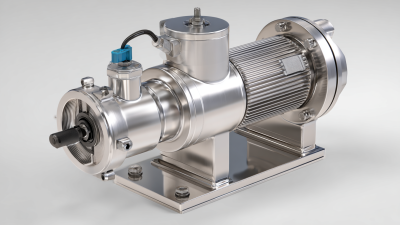
Centrifugal, multistage, and positive-displacement pumps are common designs. Their wetted parts may use different stainless-steel grades depending on the fluid and operating conditions.
About the chart: It compares representative chromium and nickel content for grades 304, 316, and duplex 2205, which may be selected for pump components. Values are midpoints of commonly specified composition ranges, not guaranteed analyses. Grade suitability depends on the fluid, temperature, pressure, and applicable material specifications.
Stainless steel pump choice depends on fluid, hygiene needs, pressure, and cleaning method—not appearance alone. Centrifugal pumps suit thin liquids such as water, milk, and beverage ingredients, where steady flow is important. In food plants, sanitary centrifugal models commonly transfer liquids and support clean-in-place circuits. Smooth wetted surfaces help with washdown, but they do not replace validated cleaning. Keep flow gentle. For thick sauces, syrups, or creams, rotary-lobe and twin-screw pumps handle viscous products without relying on high-speed impellers. Their lower-shear action can help protect texture, though seal design and product residue still need attention.
Multistage centrifugal pumps are common in high-pressure services, including reverse-osmosis feed and boiler-water systems. Submersible stainless pumps are used in drainage and wastewater sumps. One easy mistake is treating “stainless” as a complete material specification. Chlorides, acids, temperature, and cleaning chemicals can affect corrosion resistance, so the alloy must match the actual service. Stainless is not corrosion-proof. The U.S. Department of Energy’s Improving Pumping System Performance: A Sourcebook for Industry reports that pumping systems account for nearly 20% of global electricity demand and 25–50% of energy use in some industrial operations. These are system-wide estimates, not figures for stainless pumps alone; they underline why selecting the right pump type and operating conditions matters.
Choosing a stainless steel pump starts with the liquid, not the pump casing. Record its viscosity, temperature, acidity, chloride content, and any suspended particles. For clean, low-viscosity liquids and steady flow, centrifugal pumps are common. They suit water transfer and circulation. For viscous liquids or accurate dosing, a positive-displacement design may be a better fit. Solids can change the answer; check the passage size and risk of clogging. Small details matter.
Match materials to the actual chemistry. Grade 316 often resists chlorides better than 304, but concentration and temperature still matter. Neither grade is immune to every corrosive liquid. Then compare the required flow and total head with the pump curve, and check efficiency near the normal operating point.
The U.S. Department of Energy’s Improving Pumping System Performance sourcebook reports that pumping systems use nearly 20% of global electricity, and 25–50% of energy in some industrial facilities. Efficiency deserves attention.
Also assess cleanability, seal compatibility, noise, and maintenance access. A compact unit may fit the floor plan but leave little room to remove a seal. That trade-off is easy to miss. Test the selection against startup, shutdown, and worst-case fluid conditions before specifying it.