7 Tips for Choosing the Best Pump Skid Packages?
Selecting the right pump skid packages is less about choosing a powerful pump and more about understanding the complete operating environment. Dr. Lev Nelik, a recognized pump specialist and author, has emphasized: “A pump is not an island; it is part of a system.” That practical idea should guide every specification, review, and purchase decision.
This guide introduces seven useful tips for evaluating pump skid packages before money is committed. Start with the actual flow rate, pressure range, fluid temperature, viscosity, and operating cycle. A skid handling clean water may need different materials than one moving abrasive slurry or corrosive chemicals. Small details matter. Check nozzle orientation, baseplate stiffness, lifting points, access space, and vibration control. A compact skid can look efficient while creating maintenance problems beside a crowded pipe rack.
Review the pump curve carefully. Confirm that the selected duty point remains stable during normal and upset conditions. Then examine the motor, seal plan, coupling guard, instrumentation, and control logic as one coordinated package. Ask whether the supplier has tested similar assemblies in the field. Experience often exposes weaknesses that drawings hide.
Do not overlook documentation. Certified drawings, material records, test reports, and spare-parts lists support reliable commissioning. However, no package is perfect. I have seen well-designed skids delayed by unclear interfaces and poorly marked cables. That is worth reflecting on. The best choice balances performance, maintainability, lifecycle cost, and realistic site conditions—not simply the lowest quotation.
Define the Pumping Requirements and Operating Conditions
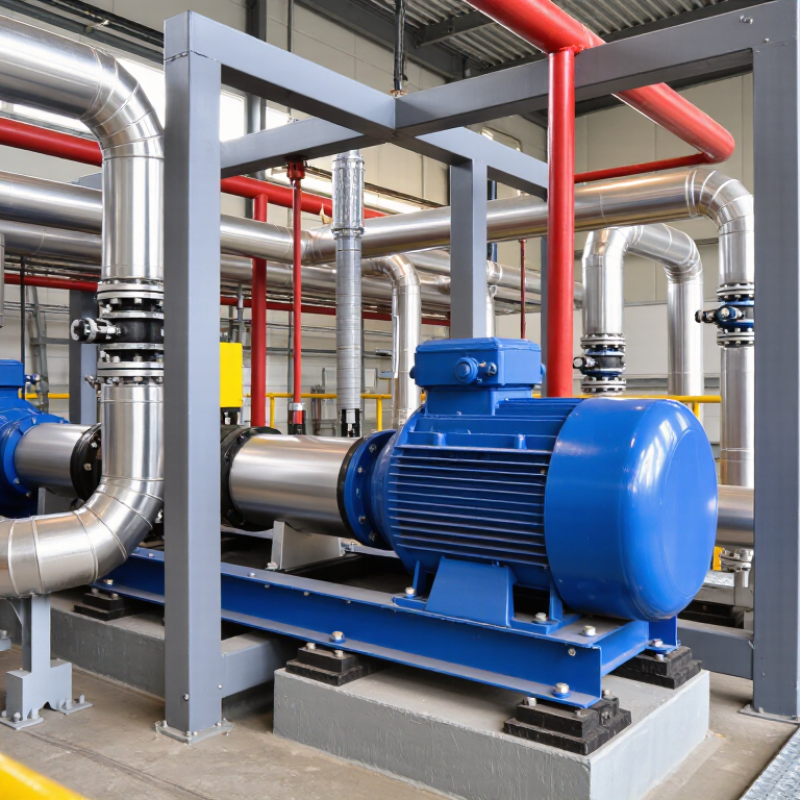
Choosing a pump skid package starts with a clear description of the work. Record fluid type, density, viscosity, temperature, solids content, and corrosive behavior. Then define required flow, differential pressure, suction conditions, and operating hours. A pump rated only for peak flow may waste energy during normal service. That mistake appears often in field reviews.
Ask whether demand is constant, seasonal, or controlled by a variable-speed drive. Plot the duty points instead of relying on one number. Include startup, shutdown, standby, and emergency scenarios. A clean liquid at 20°C behaves differently from a warm slurry near its settling limit. Small details matter. Measure the actual suction line, including elevation, bends, valves, and filter losses. Calculate available NPSH at the lowest liquid level, not the convenient average. Leave a sensible margin after comparing it with the pump’s required NPSH.
Do not trust an old drawing blindly. Site conditions change. I have seen an apparently adequate system cavitate after a temporary hose was added. Specify materials, seal arrangement, motor enclosure, instrumentation, and allowable noise before requesting quotations. Ask for documented pump curves, test conditions, and control logic. Verify that the skid footprint fits maintenance access, lifting routes, and drainage needs. One uncomfortable question remains: are the stated requirements measured, or merely inherited? That answer can change the package.
7 Tips for Choosing the Best Pump Skid Packages: Define the Pumping Requirements and Operating Conditions
Start with the required flow rate, total dynamic head, fluid properties, temperature, suction conditions, control method, materials, safety requirements, and future capacity. The chart below uses the pump affinity laws to show how speed changes theoretically affect flow, head, and power for the same pump and impeller diameter.
Engineering reference: For geometrically similar operation, flow varies approximately with speed, head varies with the square of speed, and power varies with the cube of speed. Actual operating points must also be checked against the system curve, available NPSH, motor limits, efficiency, and control requirements.
Seven selection considerations
- Define the normal, minimum, and maximum flow rates.
- Calculate total dynamic head, including static lift and system friction.
- Confirm fluid temperature, viscosity, density, solids content, and chemical compatibility.
- Check suction conditions and required net positive suction head margin.
- Select suitable controls, such as variable-frequency drive or throttling control.
- Match motor power, electrical supply, instrumentation, and protection systems.
- Allow for maintenance access, redundancy, future expansion, and site safety requirements.
Match Pump Type, Capacity, and Pressure to the Application
7 Tips for Choosing the Best Pump Skid Packages
Match the pump type to the fluid, temperature, and solids content. Centrifugal pumps suit steady, clean-flow duties. Positive displacement pumps often handle viscous fluids more reliably. Confirm the required flow rate under actual operating conditions, not catalogue conditions. Then calculate total dynamic head, including elevation, friction, valves, and filters. A small pressure mistake can create a large performance gap.
Check the operating point against the pump curve. Avoid selecting a unit that runs far from its best efficiency point. The U.S. Department of Energy reports that pumping systems use nearly 20% of industrial electricity. Efficiency therefore affects both operating cost and equipment life. Select a motor with suitable service factor and verify voltage, frequency, and control requirements. Consider variable-speed control when demand changes frequently. It may reduce throttling losses, but only after checking minimum flow limits.
Review materials carefully. Stainless steel, coated carbon steel, and elastomers behave differently in corrosive service. Confirm nozzle orientation, skid dimensions, lifting points, drains, and maintenance access. Ask for vibration, noise, and factory test data. The Hydraulic Institute emphasizes standardized pump performance testing and clear measurement practices. Use those records to challenge uncertain claims. I have seen projects focus on maximum flow and overlook suction conditions. That is an expensive lesson. NPSH margin, start-up behavior, and future capacity deserve equal attention. A perfect spreadsheet still cannot replace field experience.
7 Tips for Choosing the Best Pump Skid Packages? - Match Pump Type, Capacity, and Pressure to the Application
| Tip |
Application Requirement |
Recommended Pump Type |
Typical Capacity Range |
Typical Differential Pressure |
Key Selection Considerations |
| 1 |
Confirm the required flow rate |
Centrifugal pump for continuous, steady-flow service |
20–1,000 m³/h |
2–15 bar |
Size the pump for the normal operating point, while checking minimum and maximum flow conditions. Avoid selecting a pump solely by pipe size. |
| 2 |
Match pressure and total dynamic head |
Multistage centrifugal pump for higher-pressure duties |
5–300 m³/h |
15–100 bar |
Include static head, friction losses, equipment pressure drops, elevation changes, and the required discharge pressure in the calculation. |
| 3 |
Handle viscous or shear-sensitive fluids |
Positive displacement gear, screw, or progressive cavity pump |
0.1–500 m³/h |
2–40 bar |
Evaluate viscosity over the full temperature range, slip, pulsation, relief protection, and whether the fluid contains suspended solids. |
| 4 |
Select materials for fluid compatibility |
Centrifugal or positive displacement pump with compatible wetted parts |
Application dependent |
Application dependent |
Check pH, chloride content, temperature, abrasiveness, chemical concentration, elastomer compatibility, and corrosion allowance before finalizing materials. |
| 5 |
Account for solids, gas, or entrained air |
Self-priming, vortex, slurry, or solids-handling pump |
5–500 m³/h |
1–15 bar |
Specify solids concentration, particle size, gas volume, suction conditions, and required wear resistance. Standard clean-liquid pumps may lose performance or clog. |
| 6 |
Verify suction conditions and NPSH |
End-suction or vertical pump with an adequate NPSH margin |
10–800 m³/h |
2–20 bar |
Confirm available NPSH exceeds required NPSH at the maximum operating temperature and flow. Consider vapor pressure, suction-line losses, altitude, and tank level. |
| 7 |
Configure controls, redundancy, and maintenance access |
Duty/standby skid with variable-frequency drive and automated protection |
Based on process demand |
Based on system design |
Consider automatic lead-lag operation, pressure or flow control, dry-run protection, vibration monitoring, isolation valves, lifting points, drainage, and safe access for servicing. |
|
Note: The ranges shown are typical preliminary selection ranges, not guaranteed operating limits. Final pump skid sizing should be based on verified process data, system curves, fluid properties, temperature, applicable codes, and the manufacturer's certified performance curves.
|