Cost of Repairing vs. Replacing ANSI Pumps: A Comprehensive Analysis

Blog

Top 10 Pumping Solutions Tips for Global Buyers?

In the world of pumping solutions, expert insights can transform how global buyers approach their needs. Kevin Donnelly, a renowned authority in the pumping industry, emphasizes, “Understanding your specific requirements is crucial for selecting the right pumping solutions.” His perspective highlights the importance of tailored solutions over one-size-fits-all options.

As the demand for efficient and reliable pumping systems grows, buyers face numerous challenges. From understanding technical specifications to evaluating operational costs, the complexity can be overwhelming. Each decision impacts efficiency and sustainability, which are vital in today's market. Mistakes in this field can lead to delayed projects and increased costs.

Beyond technical specifications, there’s an urgent need for transparency in supplier capabilities. Buyers must ask critical questions about the performance history of pumping solutions. Relying solely on brand reputation may lead to missed opportunities. An effective approach involves thorough research and engagement with multiple suppliers to find the best fit. Reflecting on this market, it's clear that informed choices are paramount for success in choosing pumping solutions.

Top 10 Pumping Solutions Tips for Global Buyers?

Understanding the Global Pump Market Trends and Demand Forecasts

Top 10 Pumping Solutions Tips for Global Buyers?

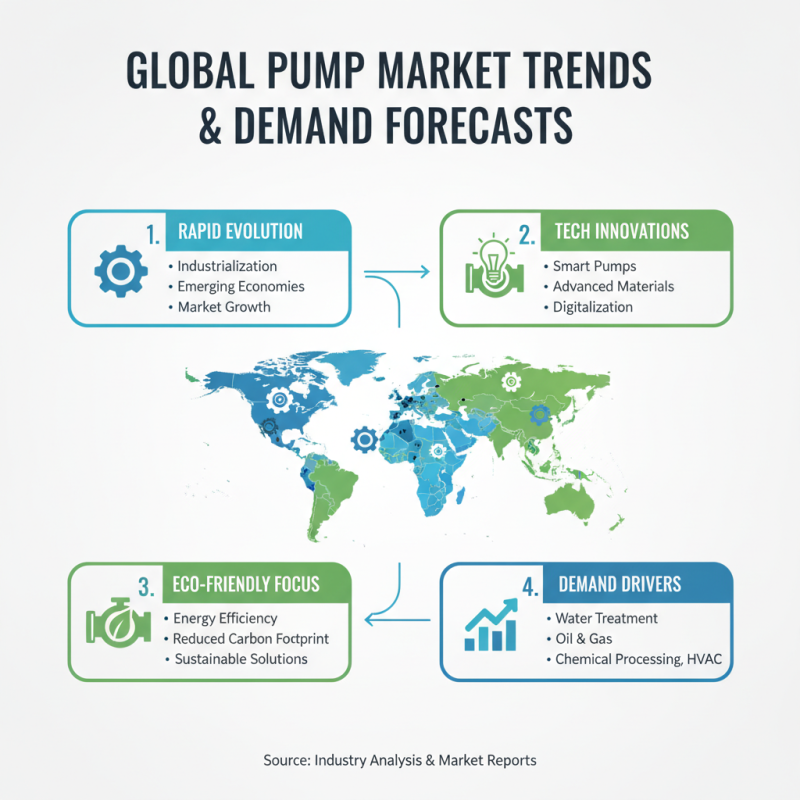
The global pump market is evolving rapidly. Buyers must understand key trends that influence demand. Increasing industrialization in emerging economies drives growth. Additionally, innovations in pump technology are reshaping the landscape. Environmentally friendly pumps are gaining traction. They provide efficiency while reducing carbon footprints.

Market analysts predict a continuing rise in demand. Sectors like water supply, petrochemicals, and pharmaceuticals are expanding. Each sector has unique requirements, impacting the types of pumps needed. Buyers should focus on sustainability. This is crucial as regulations tighten across many regions. The need for energy-efficient solutions is more pronounced than ever.

However, navigating this market isn't without challenges. Understanding regional differences in regulations can be complex. Moreover, varying quality standards may lead to confusion. Buyers must conduct thorough research. Engaging with industry experts can provide valuable insights. Awareness of these factors can lead to better purchasing decisions. Keeping an eye on market dynamics is essential for success.

Key Factors Influencing Pump Selection for Different Applications

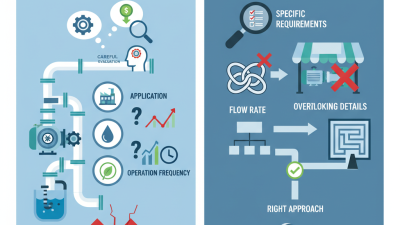
When selecting a pump for various applications, several key factors come into play. For instance, fluid characteristics are crucial. Viscosity, temperature, and chemical compatibility directly affect performance. According to the Hydraulic Institute, around 70% of pump failures result from improper fluid selection. Buyers must analyze these properties carefully to avoid costly mistakes.

Another significant factor is the required flow rate. Different applications demand varying capacities. Industrial processes may require high flow rates, while residential uses often need less. A recent report by the American Society of Mechanical Engineers suggests that an estimated 30% of energy in pumping systems is wasted due to improper sizing. Over-sizing can lead to inefficiencies, while under-sizing can cause operational issues. Accurate calculations are essential for effective pump selection.

Lastly, energy efficiency plays an increasingly important role. With rising energy costs globally, many buyers seek pumps that use less energy while maintaining effectiveness. A study from the U.S. Department of Energy indicated that energy-efficient pumps can reduce operating costs by up to 20%. However, balancing upfront investment with long-term savings requires careful evaluation. It's a complex decision, and each buyer must weigh their unique needs against these factors.

Evaluating Pump Efficiency: Metrics and Industry Benchmarks

When assessing pump efficiency, specific metrics come into play. Flow rate, energy consumption, and head pressure are critical indicators. According to the Hydraulic Institute, pumps can consume up to 20% of a plant's energy. Understanding these figures helps in evaluating efficiency.

Site-specific benchmarks provide further context. For instance, the average efficiency of centrifugal pumps ranges from 70% to 90%. Conditions like pipe friction can significantly affect performance. Identifying these benchmarks can highlight areas for improvement.

Regular performance audits are essential in drawing insights. Industry insights suggest that around 40% of pumps operate inefficiently. This inefficiency can lead to increased operational costs. Engaging with professionals to analyze pump performance against industry standards can enhance overall productivity. Small adjustments can lead to significant savings.

Top 10 Pumping Solutions Tips for Global Buyers

This chart illustrates the efficiency metrics of various pumping solutions available in the market. The efficiency percentages represent the performance benchmarks for typical industrial pumps.

The Role of Material Selection in Pump Longevity and Performance

Top 10 Pumping Solutions Tips for Global Buyers?

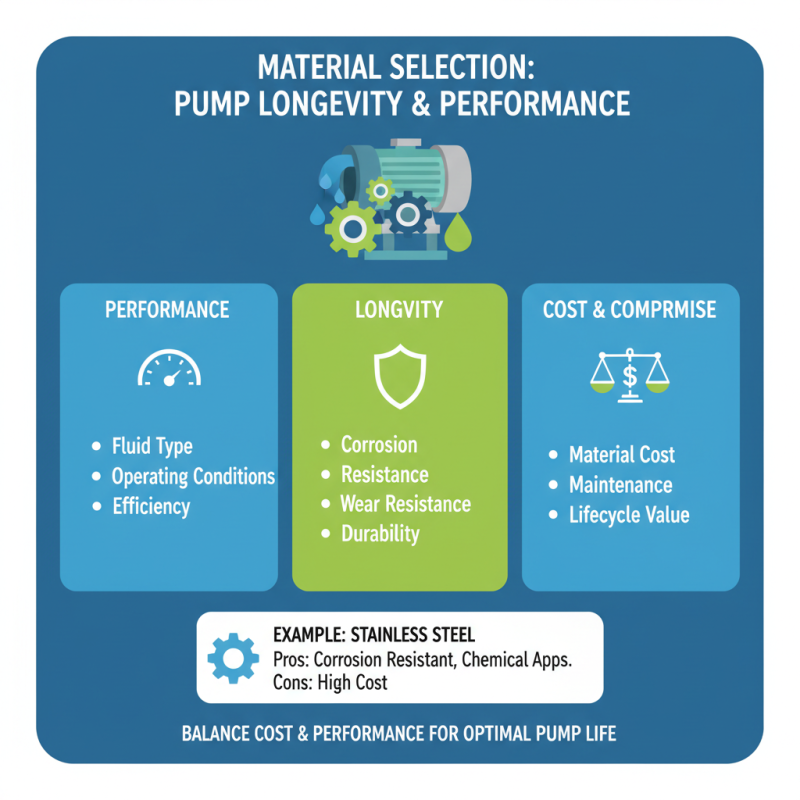
When selecting materials for pumps, performance and longevity are critical. The right material can significantly affect how a pump performs under different conditions. For instance, stainless steel is known for its corrosion resistance, making it ideal for chemical applications. However, this material can be cost-prohibitive for some buyers. Balancing cost and performance is often challenging.

Polymer materials, on the other hand, are lightweight and can handle various chemical exposures. Yet, they may not perform well under high temperatures or pressures. Understanding these trade-offs is essential for making informed decisions. Some buyers might overlook the long-term consequences of their material choices. This oversight can lead to frequent replacement and increased operational costs.

Moreover, pump components must be compatible with the intended application. A mismatch can result in failure. Buyers should consider environmental factors and operational conditions. Evaluating options isn't straightforward. Collaboration with material scientists or industry experts may be necessary to ensure optimal choices. Remember, the durability of a pump often hinges on its components.

Sustainability and Innovation in Pump Technologies for Global Buyers

In today's rapidly evolving world, sustainability and innovation in pump technologies are essential for global buyers. As industries pursue eco-friendly solutions, assessing the impact of pump types is crucial. Modern pumps now use energy-efficient designs and materials that minimize waste. A focus on reducing carbon footprints is necessary for responsible procurement.

Tip: Prioritize pumps that integrate smart technology. These devices optimize energy use and can provide real-time performance data. This fosters better decision-making for maintenance and upgrades.

It's also vital to evaluate the lifecycle of pumping systems. Short-term savings could lead to long-term inefficiencies. Investing in high-quality technology may cost more initially but often results in better resilience and lower environmental impact.

Tip: Collaborate with suppliers who prioritize sustainability. They can provide insights on innovative materials and processes. This partnership can lead to enhanced product development that aligns with global sustainability goals.

Top 10 Pumping Solutions Tips for Global Buyers

Tip Number Tip Description Benefits Sustainability Impact
1 Choose energy-efficient pumps Reduced energy costs and improved performance Lower carbon footprint
2 Implement IoT monitoring systems Real-time analytics and maintenance alerts Enhanced resource management
3 Opt for variable speed drives Improved flow control and energy savings Reduction in power consumption
4 Select non-corrosive materials Increased longevity and performance Less waste generation
5 Regular maintenance schedules Optimal efficiency and reduced downtime Prolonged equipment lifespan
6 Consider centrifugal pumps for fluids High efficiency for moving large volumes Minimized energy wastage
7 Use positive displacement pumps where applicable Accurate flow for viscous liquids More efficient use of resources
8 Invest in advanced control systems Enhanced operational control Lower environmental impact
9 Leverage data analytics for pump selection Informed decision and improved efficiency Conservation of resources
10 Stay updated on industry innovations Access to cutting-edge solutions Continuous improvement in sustainability practices

Proud Member Of Curry Supply Holdings
Since 1932

Tour Our State-of-the-Art Facility

Click for a Quick Quote