Cost of Repairing vs. Replacing ANSI Pumps: A Comprehensive Analysis

Blog

Top 10 Festo Pneumatic Connectors for Global Buyers

Choosing the right Festo Pneumatic Connectors can influence air efficiency, assembly speed, and machine reliability. A small fitting may sit unnoticed inside a cabinet, yet it controls every tube connection. For global buyers, product selection involves more than price or brand recognition. Thread standards, tube diameters, pressure ratings, materials, and operating temperatures all deserve careful attention.

This guide introduces ten widely relevant Festo connector options for industrial pneumatic systems. Each option is considered through practical buying factors, including installation space, sealing performance, maintenance access, and compatibility with existing equipment. Push-in connectors may reduce assembly time, while threaded models can support more fixed layouts. Elbow, tee, straight, and bulkhead designs solve different routing problems. The best choice depends on the machine, not a simple popularity ranking.

Real-world experience shows that small details often create large delays. A connector may fit the tube but fail to match the port thread. A compact design may simplify installation but restrict tool access. Buyers should verify official Festo datasheets, authorized distributor information, and regional availability before ordering. Specifications can vary by series and market. That matters.

This overview also acknowledges an important limitation: no universal top ten exists. A food-processing line, packaging machine, and factory robot may require different connector materials and sealing methods. Careful comparison remains essential. By combining manufacturer data with installation experience, global buyers can reduce leakage risks, avoid unnecessary adapters, and select Festo Pneumatic Connectors with greater confidence.
Top 10 Festo Pneumatic Connectors for Global Buyers

Festo Pneumatic Connectors: Definition, Function, and Product Scope

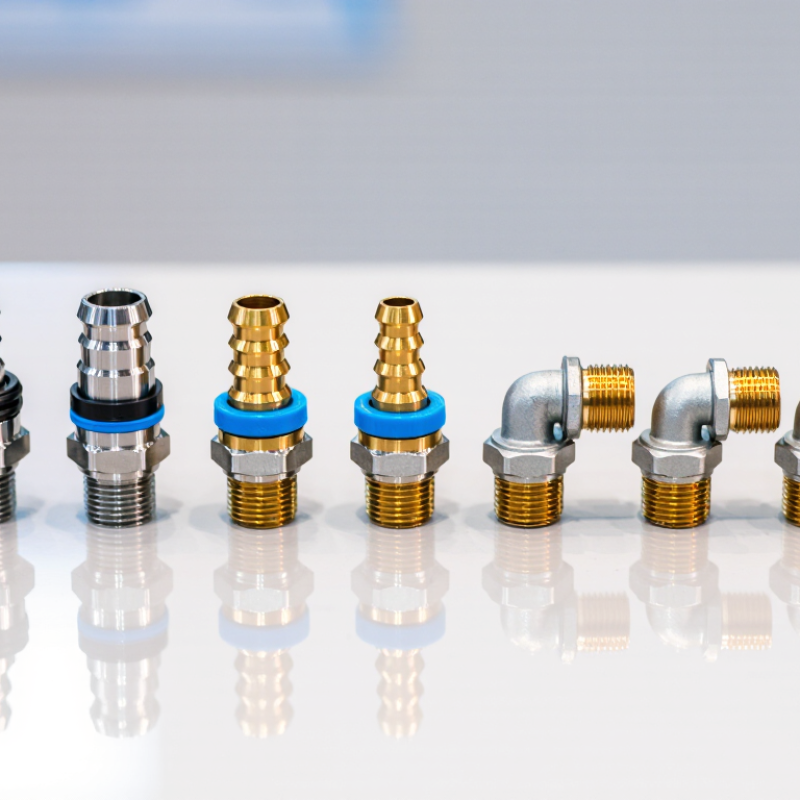
Pneumatic connectors are mechanical fittings that join tubing, valves, cylinders, and air preparation units. They guide compressed air through a sealed path. A dependable connection should resist vibration, pressure changes, and repeated assembly. Small leaks can reduce cylinder speed and increase compressor workload.

The product scope includes push-in fittings, threaded adapters, bulkhead connectors, swivel elbows, tees, reducers, and tube plugs. Common materials include nickel-plated brass, stainless steel, and engineered polymers. Buyers should check tube diameter, thread type, working pressure, temperature range, and sealing method. Compatibility with air, inert gas, or other approved media also matters. It sounds basic. It is not.

From factory installation work, I have found that access often matters more than catalog appearance. A compact elbow may prevent sharp tubing bends near a moving actuator. A swivel fitting can simplify maintenance, but excessive rotation may shorten service life. Product data should include dimensional drawings, pressure tests, material details, and traceability records. Independent verification is valuable. Selection charts are useful, yet they cannot replace checking the actual machine. I have seen experienced technicians overlook thread standards during urgent repairs. That mistake was avoidable. A reliable purchasing process compares samples, confirms installation torque, and records performance after commissioning.


How the Top 10 Festo Connector Types Are Classified

Pneumatic connectors are easier to compare when classified by connection method, shape, and operating purpose. Push-in connectors hold tubing with a collet, while threaded models join valves, cylinders, or manifolds. Tube-to-tube designs suit extensions and repairs. Tube-to-thread designs connect flexible lines to fixed equipment.

Shape creates another useful classification. Straight connectors support direct routing. Elbows turn tubing around crowded panels. Tees divide one air path, while Y-connectors create smoother branch layouts. Bulkhead connectors pass through cabinet walls. Reducers join different tube diameters. Flow-control fittings add adjustment, but they should not be confused with simple joining connectors.

Tips: Check tube outside diameter, thread standard, pressure range, and working temperature before ordering. Metric and inch sizes may appear similar, yet they are not interchangeable. Inspect sealing surfaces and confirm the material suits moisture, oil, or cleaning conditions. A short sample test can prevent a costly shipment error. I still recheck thread details manually because catalog labels are sometimes too brief. Classification helps, but real installation space may change the best choice. Measure the panel twice.

Top 10 Festo Pneumatic Connectors for Global Buyers - How the Top 10 Festo Connector Types Are Classified

Comparative classification of commonly used pneumatic connector designs by geometry, connection method, tubing compatibility, performance range, and typical application.

No. Connector Type Classification Connection Configuration Common Tube Outside Diameters Typical Thread Standards Typical Working Pressure Typical Temperature Range Common Materials Typical Applications
1 Straight Push-In Fitting Inline connector Tube-to-female-thread or tube-to-tube connection in a straight line 4, 6, 8, 10, 12 mm; 1/4, 5/16, 3/8, 1/2 in G, R, NPT, or metric thread options Usually up to 10 bar at room temperature; design-dependent Approximately -20°C to +80°C with standard polymer tubing Nickel-plated brass, stainless steel, engineered polymer, NBR or FKM seal General air distribution, valve ports, cylinders, control panels
2 90-Degree Elbow Directional connector Tube-to-thread connection with a fixed right-angle outlet 4, 6, 8, 10, 12 mm; 1/4, 3/8, 1/2 in G, R, NPT, or metric thread options Usually up to 10 bar; flow capacity varies by bore size Approximately -20°C to +80°C for standard versions Plated brass or polymer body with elastomer sealing element Compact machine layouts, air preparation units, restricted installation spaces
3 Swivel Elbow Adjustable directional connector Tube-to-thread connection with a rotating or adjustable elbow body 4, 6, 8, 10, 12 mm; 1/4, 3/8, 1/2 in G, R, NPT, or metric thread options Usually up to 10 bar; pressure rating depends on swivel construction Approximately -20°C to +80°C for standard sealing materials Nickel-plated brass, stainless steel, polymer, NBR or FKM seals Moving pneumatic assemblies, robotic tooling, cylinders, flexible routing
4 Tee Connector Branch connector Three-way connection for splitting or joining an air circuit 4, 6, 8, 10, 12 mm; 1/4, 3/8, 1/2 in Push-in tube ports; threaded variants also available Usually up to 10 bar in standard industrial service Approximately -20°C to +80°C Polymer or plated brass body; elastomer seals where applicable Parallel actuator circuits, sensor branches, manifold extensions
5 Y Connector Low-loss branch connector Three-way connection with two outlets arranged in a Y geometry 4, 6, 8, 10, 12 mm; 1/4, 3/8 in Push-in tube ports are most common Usually up to 10 bar; depends on port size and body material Approximately -20°C to +80°C Acetal, polyamide, nickel-plated brass, NBR or FKM seals Air distribution with smoother routing and reduced bending stress
6 Cross Connector Multi-branch connector Four-way connection for intersecting or distributing pneumatic lines 4, 6, 8, 10, 12 mm; 1/4, 3/8 in Push-in tube ports; threaded versions available Usually up to 10 bar in standard compressed-air applications Approximately -20°C to +80°C Engineered polymer, plated brass, and elastomer sealing components Compact manifolds, test circuits, synchronized air distribution
7 Bulkhead Connector Panel-mount connector Tube connection passing through a panel, frame, or enclosure wall 4, 6, 8, 10, 12 mm; 1/4, 3/8 in Locknut or threaded panel-mount design Usually up to 10 bar; panel thickness and seal design are relevant Approximately -20°C to +80°C Plated brass or polymer body with sealing washer and retaining nut Control cabinets, machine guarding, modular equipment frames
8 Tube Reducer Size-transition connector Connects two tubes with different outside diameters Typical combinations include 8-to-6, 10-to-8, and 12-to-10 mm Usually push-in tube-to-tube connection Usually up to 10 bar when both connected tubes are rated accordingly Approximately -20°C to +80°C Acetal, polyamide, plated brass, NBR or FKM sealing elements Equipment upgrades, mixed-size circuits, flow-line transitions
9 Tube Union Straight tube-to-tube connector Joins two tubes of the same outside diameter in a straight line 4, 6, 8, 10, 12 mm; 1/4, 5/16, 3/8, 1/2 in Push-in tube ports; some versions use compression connections Usually up to 10 bar for industrial compressed air Approximately -20°C to +80°C Polymer or plated brass body with elastomer seals Tube repairs, extensions, machine assembly, maintenance replacement
10 Tube-to-Thread Adapter Interface adapter Converts a push-in tube connection to a male or female threaded port 4, 6, 8, 10, 12 mm; 1/4, 3/8, 1/2 in G, R, NPT, or metric thread options Usually up to 10 bar; thread sealing method affects performance Approximately -20°C to +80°C for standard versions Nickel-plated brass, stainless steel, polymer, NBR or FKM seals Connecting tubing to valves, regulators, cylinders, gauges, and manifolds
Technical note: Pressure and temperature values shown are common industrial ranges for standard pneumatic connector constructions, not universal ratings. Actual limits depend on connector size, tubing material, seal compound, working medium, thread standard, and manufacturer specifications.

Key Specifications Global Buyers Should Compare

Top 10 Pneumatic Connectors for Global Buyers

Key Specifications Global Buyers Should Compare

When comparing the top ten pneumatic connectors, start with tube outside diameter and port thread standards. A connector may fit the tube but still mismatch the machine port. Check metric and imperial options carefully. Also compare rated pressure, operating temperature, and recommended air quality. These figures affect performance in dusty factories and cold shipping regions.

Material selection deserves close attention. Nickel-plated brass offers strength, while engineering polymers can reduce weight and cost. Inspect the sealing method, thread coating, and release sleeve design. A reliable fitting should hold firmly without damaging soft tubing. Flow capacity matters too. Two connectors with identical sizes may deliver different airflow because of internal restrictions.

Tips: Request drawings, test data, and sample pieces before bulk purchasing. Confirm batch traceability, packaging protection, and replacement availability. Do not rely on catalog pressure alone. Installation angle, vibration, and repeated disconnection can change real results. A perfect connector does not exist. The best choice balances pressure, flow, durability, size, and total ownership cost. In field evaluations, small details often matter more than attractive pricing. One overlooked thread standard can delay an entire assembly. That is an expensive lesson.

Compatibility, Applications, and International Compliance Factors

Top 10 pneumatic connector designs should be assessed beyond thread size. Global buyers need to verify tube diameter, thread standard, seal material, pressure rating, temperature range, and airflow capacity. A connector may fit mechanically yet fail in service.

In field audits, thread confusion remains common. G, R, and NPT threads are not automatically interchangeable. Metric tubing also needs precise outside-diameter matching. For robotic grippers, compact push-in fittings reduce assembly time. Food-processing lines require cleanable materials and suitable declarations. Outdoor equipment needs corrosion resistance and stable seals. The application changes the correct choice.

Energy performance matters too. The U.S. Department of Energy reports that compressed-air leaks can waste 20–30% of compressor output in poorly maintained systems.

Small leaks matter. Select connectors with reliable tube retention and inspect them under operating pressure. For safety, purchasing teams should reference ISO 4414. Air purity should follow ISO 8573-1, especially near instruments or sensitive products. Export files may also require material traceability, test records, and applicable chemical or food-contact declarations. These requirements vary by destination. Do not assume one certificate covers every market. That shortcut can fail.

A practical comparison should rank the ten options by compatibility, application fit, documentation quality, and lifecycle cost. I would still recheck seal performance after thermal cycling. Catalog data can look complete, but real installations are less predictable.

How to Select and Source the Right Festo Connectors

Selecting the right pneumatic connector requires more than matching a familiar product code. Start with the tube’s outside diameter, thread standard, working pressure, and operating temperature. A connector that fits physically may still leak under vibration or heat.

In field sourcing, I check the application before comparing prices. Push-in fittings support faster assembly, while threaded fittings can suit rigid equipment layouts. Confirm seal material against air quality, moisture, oil exposure, and cleaning chemicals. Ask suppliers for dimensional drawings, pressure data, material details, and batch traceability. Samples are useful, but one sample cannot prove long-term reliability. I once overlooked a small thread-standard difference, creating unnecessary rework. That mistake still influences my inspection checklist.

Tips: Measure twice. Test under pressure. Keep the sample connected for several hours, then inspect for pressure loss, tube movement, and visible seal deformation. Request a controlled sample before placing a large order. Compare supplier response times, packaging quality, inspection records, and replacement support. For global purchasing, confirm labeling and documentation are clear for warehouse teams. Do not assume a lower unit price is cheaper after installation delays and rejected batches. A practical sourcing decision balances fit, performance, consistency, and total operating cost.

Top 10 Pneumatic Connector Interfaces for Global Buyers

Comparing nominal tube outside diameters helps buyers match connector sizes with tubing, valves, actuators, and regional supply standards.

The chart uses commonly specified metric and imperial pneumatic tube sizes. Before sourcing, confirm thread standard, sealing method, working pressure, temperature range, tubing material, and applicable regional requirements.

Proud Member Of Curry Supply Holdings
Since 1932

Tour Our State-of-the-Art Facility

Click for a Quick Quote