Cost of Repairing vs. Replacing ANSI Pumps: A Comprehensive Analysis

Blog

How to Choose the Right Priming Pump for Your Needs in 2026?

Choosing the right priming pump can be daunting in 2026. With numerous options on the market, it’s essential to find a pump that fits your specific needs. According to industry expert John Miller, “A priming pump is not just a tool; it’s a lifeline for many applications.” His insights highlight the significance of selecting the correct pump.

The features of priming pumps vary widely, including size, power, and purpose. You must consider what you need before making a decision. Pay attention to the environment where the pump will be used. Will it be in harsh conditions? This factors into your selection. Each type of priming pump has its strengths and weaknesses, making it crucial to research.

Moreover, relying solely on brand reputation may lead to missteps. It's wise to gather user feedback and reviews. Sometimes an unknown brand can outperform a well-known one. A thorough review process will reduce regrets later. Ultimately, understanding your specific requirements is key to making an informed choice.

How to Choose the Right Priming Pump for Your Needs in 2026?

Understanding the Basics of Priming Pumps and Their Applications in 2026

How to Choose the Right Priming Pump for Your Needs in 2026?

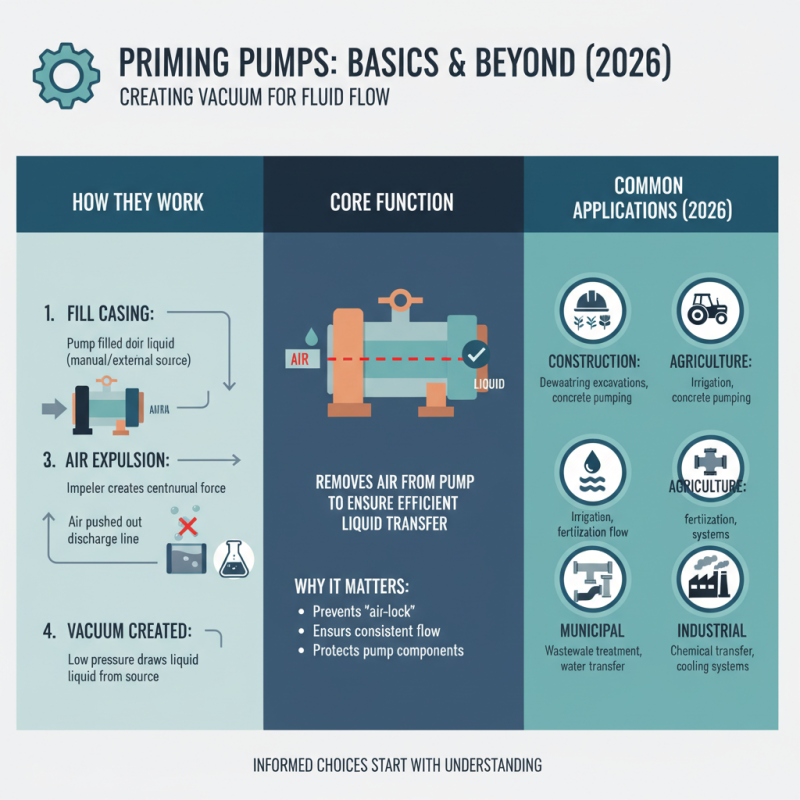
Priming pumps serve a critical role in various applications, from construction to agricultural settings. Understanding their basics involves recognizing how these pumps create a vacuum, allowing water or other liquids to flow. They are typically used to remove air from the pump casing, ensuring efficient operation. Knowing how they work is essential for making informed choices.

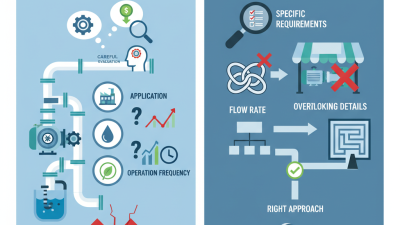
Choosing the right priming pump in 2026 means considering your specific needs. Factors like flow rate, application type, and environment are crucial. Whether it's for dewatering, irrigation, or transferring liquids, the pump's material and design matter. For example, a stainless-steel casing might be ideal for corrosive substances. Also, reflect on the power source—some users may overlook energy efficiency in their choices.

Many might rush into purchasing without thorough research. It's crucial to examine your operational requirements closely. An ill-suited pump can create delays and frustration. Invest time in understanding your context; sometimes, seeking advice from professionals can reveal insights you might overlook.

Key Factors to Consider When Selecting a Priming Pump for Efficiency

How to Choose the Right Priming Pump for Your Needs in 2026?

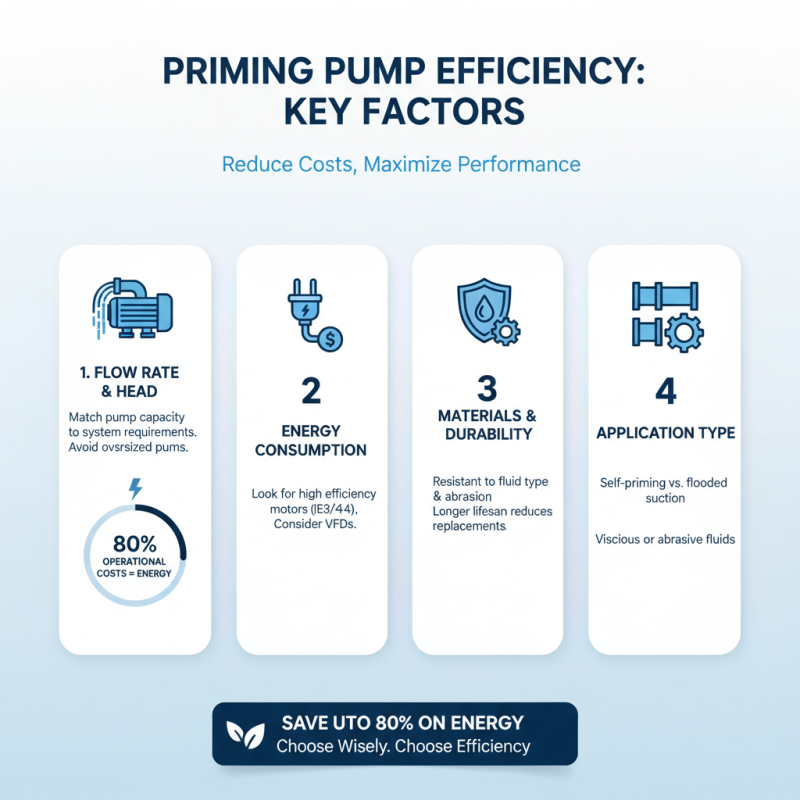
Choosing the right priming pump requires careful consideration of multiple factors. Efficiency is a key concern for many industries. According to recent industry reports, 80% of operational costs in fluid handling can be attributed to energy consumption. Selecting a pump that maximizes efficiency can significantly reduce these costs.

When looking for a pump, think about the flow rate and pressure requirements. Ensure they match your specific needs. Different applications may require different configurations. For instance, construction sites may need higher flow rates compared to agricultural applications. Verify the pump's material compatibility with the fluids used. This can prevent premature wear and increase overall reliability.

Tips: Always evaluate the total cost of ownership. Sometimes, a cheaper upfront cost can lead to higher operational costs down the line. Keep an eye out for energy-efficient models. They typically offer better long-term savings. Regular maintenance is also crucial. It ensures that the pump operates at optimal performance.

Lastly, consider the installation requirements. Some pumps may need additional accessories for optimal function. This can add unexpected costs. Conduct thorough research and consult with professionals in the field. Effective decision-making can lead to improved performance and reliability. Ensure your choice reflects both current and future needs.

Comparative Analysis of Different Priming Pump Technologies and Their Benefits

Choosing the right priming pump technology requires careful consideration. Various technologies offer unique benefits for different applications. For instance, centrifugal pumps are efficient for high flow rates. They work well with clear liquids, but they may struggle with air. In contrast, diaphragm pumps provide excellent suction lift. They excel in handling viscous fluids but can be prone to wear.

Venturi pumps, another option, utilize air to create a vacuum. They are compact and often quieter. However, their efficiency can vary based on the setup. Submersible priming pumps are designed for underwater applications. They are effective but can be challenging to maintain over time. Each type comes with trade-offs that must be weighed carefully.

Reliability is crucial in pump selection. Performance can diminish due to wear and tear. Regular maintenance is vital to avoid unexpected failures. Consider your specific needs, fluids, and environmental factors. The right choice requires a balance of efficiency, durability, and ease of maintenance.

Comparative Analysis of Priming Pump Technologies

This chart illustrates the performance ratings of various priming pump technologies. Each type of pump is evaluated based on its efficiency, ease of use, and suitability for specific applications. The ratings (out of 10) provide a quick comparison to help choose the right priming pump for your needs in 2026.

Evaluating Performance Metrics and Capacity Requirements for Your Project

When choosing a priming pump, understanding performance metrics is essential. These metrics help ensure the pump will work effectively for your project. Key metrics to consider include flow rate, suction lift, and pressure. Each project has unique needs, so it's crucial to match these figures to your requirements.

Tips: Assess your specific needs before making decisions. A pump that excels in one area might underperform in another. Analyze the distance from the water source to the pump. This can significantly impact the required suction lift.

Capacity requirements play an equally important role. Determine the volume of liquid you need to move within a specific time frame. This will guide you in selecting a pump with the proper flow rate. Remember, overestimating your needs can lead to inefficiencies. A more powerful pump than necessary may waste energy and increase costs.

Tips: Always consult project specifications. They often provide insights about required pump capacities. Testing different models before finalizing your choice can lead to better outcomes. Focus on projects’ real demands rather than theoretical capacities.

Budget Considerations: Cost vs. Quality in Priming Pump Selection

Choosing the right priming pump in 2026 involves careful consideration of budget. Balancing cost and quality is crucial. Many people tend to prioritize low price over functionality. However, this can lead to issues later on. A subpar pump may save money upfront but could cost more in repairs.

Quality pumps are often more durable. They provide reliable performance, reducing the risk of failure. When evaluating options, look at the materials used and the warranty. Short warranties increase the risk of spending more over time. Keep in mind that investing in a quality pump can mean fewer headaches down the road.

Research is key. Gather insights from trusted sources and user reviews. This can help you understand what you really need. Don't rush the decision-making process. Sometimes, the cheapest option can lead to buyer's remorse. Consider the long-term implications of your choice carefully.

Proud Member Of Curry Supply Holdings
Since 1932

Tour Our State-of-the-Art Facility

Click for a Quick Quote