What is a Bent-axis Motor and How Does it Work?
The Bent-axis Motor is a fascinating innovation in the world of engineering. It combines efficiency and compact design. Dr. John Smith, an expert in motion technology, emphasizes, "The Bent-axis Motor revolutionizes how we think about power systems." This motor design uses a unique approach to convert hydraulic pressure into mechanical energy.
The orientation of the cylinder is tilted. This allows for a more direct transfer of force. As a result, it often provides a higher power-to-weight ratio. However, some designs can be complex and require careful maintenance. Users might face challenges when troubleshooting these motors. The effectiveness of the Bent-axis Motor can vary based on its application, adding a layer of unpredictability.
In specific environments, like heavy machinery, the Bent-axis Motor truly shines. Its strength and compactness can significantly enhance operational efficiency. Yet, it’s essential to consider potential drawbacks. Proper alignment is crucial; any misalignment can lead to inefficiencies. The promise of the Bent-axis Motor continues to inspire further research and development in the field.
Understanding the Basics of Bent-axis Motors
Bent-axis motors are unique devices that convert hydraulic energy into mechanical motion. Their design features a shaft positioned at an angle, differentiating them from conventional axial motors. This angle allows for efficient energy transfer and a compact form factor. As reported by industry experts, bent-axis motors can offer up to 90% efficiency in optimal conditions. This makes them valuable in applications requiring reliable and consistent performance.
Understanding the basics of bent-axis motors involves exploring their construction. The rotor and cylinder arrangement plays a crucial role. The inclined design not only minimizes vibration but also enhances durability. In practice, these motors handle high pressures well, often exceeding 4000 psi. However, there are challenges. The precision required in manufacturing can increase costs. Furthermore, maintenance may become complex if components wear unevenly.
With advancements in technology, bent-axis motors are seeing expanded use in various sectors. Their robust nature attracts industries like aerospace and construction. Notably, market reports suggest a steady growth rate of around 5% annually, driven by demand for efficient energy solutions. Nevertheless, potential users must consider factors such as space constraints and heat management. This makes the choice of bent-axis motors a balance of benefits and challenges.
Bent-axis Motor Performance Characteristics
This chart illustrates the efficiency and torque output of a bent-axis motor at various operating speeds. As speed increases, the efficiency and torque characteristics can significantly influence the motor's performance in various applications.
Key Components of a Bent-axis Motor
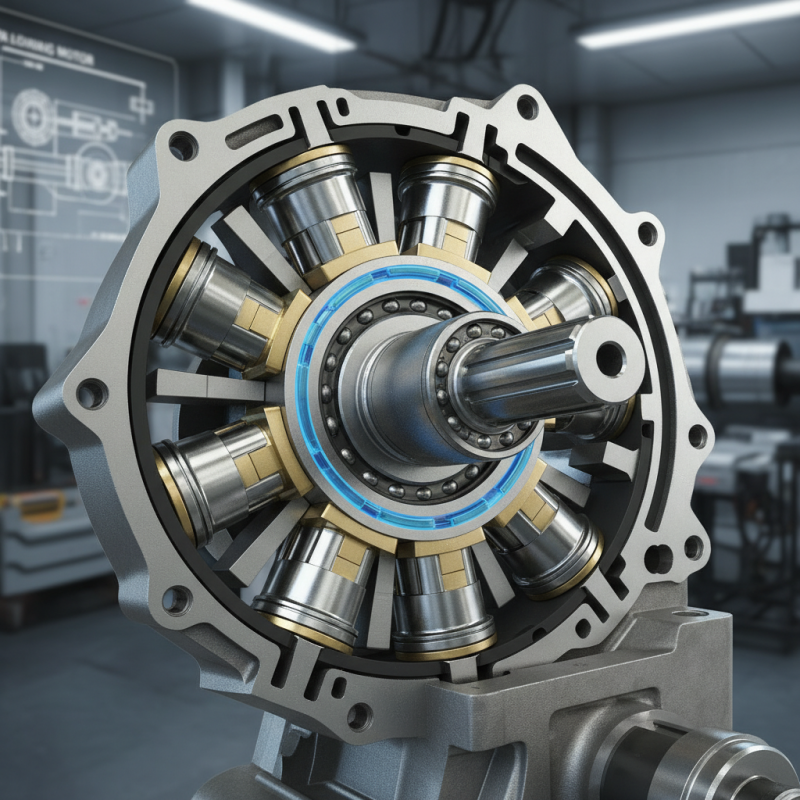
A bent-axis motor is a type of hydraulic motor known for its unique design. Its key components play a crucial role in its functionality. The main elements include the bent-axis cylinder block, pistons, and swashplate. The motor operates based on hydraulic pressure acting on the pistons. These pistons extend and retract within the cylinder, translating hydraulic force into rotational motion.
The bent-axis design allows for a more efficient power transfer compared to traditional motors. According to recent industry studies, this design can improve energy efficiency by up to 25%. The angle of the swashplate directly influences the motor's displacement and torque. This provides flexibility but also poses challenges. A miscalibration of the swashplate can lead to performance issues, affecting overall system efficiency.
Maintenance is another critical aspect. The components must be regularly inspected for wear and tear. Neglecting this can result in hydraulic fluid leaks or even catastrophic failure. Data shows that over 30% of bent-axis motor issues stem from inadequate maintenance. Understanding these key components can enhance performance and reliability, but challenges remain in achieving optimal efficiency.
Principle of Operation in Bent-axis Motors
Bent-axis motors use a unique design for power generation. They consist of a rotor and a stator that are offset. This offset creates a bent-axis mechanism that enhances torque. When pressure is applied, the rotor rotates efficiently. The movement is smooth, promoting higher performance levels.
The principle of operation relies on fluid dynamics. As fluid enters the motor, it pushes against the bent rotor. This movement converts hydraulic energy into mechanical power. The design allows for a compact structure. It offers a favorable power-to-weight ratio. However, the manufacturing process can be complex.
Real-life applications are diverse. These motors are used in construction equipment and aerospace technology. They can function under high pressures. Yet, maintenance is crucial. Regular checks are necessary to ensure optimal operation. Users should monitor performance closely. Small issues, if ignored, can lead to significant failures. Balancing efficiency and reliability remains a challenging task.
Advantages and Applications of Bent-axis Motors
Bent-axis motors offer several advantages that make them popular in various applications. These motors are known for their high efficiency. According to a recent industry report, they can achieve efficiency ratings of over 90%. This efficiency helps reduce energy consumption, making them a greener option in many settings.
Their compact design is another advantage. Bent-axis motors take up less space compared to traditional motors. This feature allows for more design flexibility in systems that have limited space. Many manufacturers are integrating them into mobile machinery, like cranes and excavators. This integration enhances performance while keeping the equipment lightweight.
In terms of applications, bent-axis motors are used extensively in hydraulic systems. They're ideal for usage in construction, agriculture, and forestry. They can handle heavy loads and perform reliably under high pressure. However, they do have some downsides. Maintenance can be challenging due to their complex design. Users often find themselves needing specialized knowledge for repairs. This can lead to added costs and downtime, something that requires careful consideration.
Comparing Bent-axis Motors with Other Motor Types
Bent-axis motors are unique in their design and functionality. They differ from traditional motors, such as radial-flow motors and axial-flow motors. The bent-axis design allows for better torque and efficiency, especially in hydraulic systems. This motor type has some advantages, but it also has limitations.
In a bent-axis motor, the drive shaft is at an angle to the cylinder block. This design leads to increased power density and responsiveness. However, there's a trade-off. Bent-axis motors can be more complex to manufacture. The precise alignment in assembly is critical, which can introduce challenges.
Tips: Regular maintenance can enhance the lifespan of a bent-axis motor. It's important to monitor fluid levels regularly. Also, be mindful of heat buildup, as excessive temperatures can reduce efficiency.
When comparing with other motor types, consider specific application needs. For instance, axial-flow motors may be simpler, but they typically offer less torque. Bent-axis motors excel in performance but require careful design consideration. Reflect on your requirements to choose the best motor type, as each has distinct pros and cons.
What is a Bent-axis Motor and How Does it Work? - Comparing Bent-axis Motors with Other Motor Types
| Motor Type | Efficiency (%) | Torque Density (Nm/kg) | Speed (RPM) | Max Pressure (Bar) | Cooling Requirement |
| Bent-axis Motor | 85 | 40 | 3000 | 450 | Yes |
| Radial Piston Motor | 90 | 35 | 2500 | 400 | No |
| Axial Piston Motor | 88 | 50 | 3600 | 600 | Yes |
| Screw Motor | 82 | 30 | 2000 | 350 | No |